
If you are sourcing steel for a Canadian construction or manufacturing project, one thing you cannot skip is understanding the Canada CSA Standards. Miss this step, and your shipment could fail inspection, delay your project, or get rejected at the border.
This guide breaks down what CSA Standards actually mean for steel buyers, how they compare with Chinese mill output, and what a practical procurement process looks like in 2026. Whether you are importing wire rod, rebar, or structural steel, the information below will help you buy with confidence.
Understanding Canada CSA Standards is the first step before placing any steel import order.
Our team at Camasteel has supported buyers across North America in sourcing mill-direct steel that meets international project standards. We also hold responsible steel sourcing as a core operating principle — so quality documentation is always part of the process.
What Are Canada CSA Standards for Steel?
The CSA Group (formerly Canadian Standards Association) sets the technical rules that govern how steel products are manufactured, tested, and used across Canada. These standards apply to everything from structural shapes and plates to wire rod and reinforcing bar.
CSA does not manufacture steel. Instead, it publishes the accepted specifications that mills and suppliers must meet. If a product carries CSA conformance, it means the steel has been produced and tested against a defined set of chemical and mechanical requirements.
Key steel-related standards include:
- CSA G40.20/G40.21 – Structural quality steel (plates, bars, shapes)
- CSA A23.1/A23.2 – Concrete requirements, which indirectly govern rebar spec
- CSA G30.18 – Billet steel bar for concrete reinforcement
- CAN/CSA-W47.1 – Certification for fusion welding of steel structures
For more detail directly from the source, visit the CSA Group’s official standards portal.
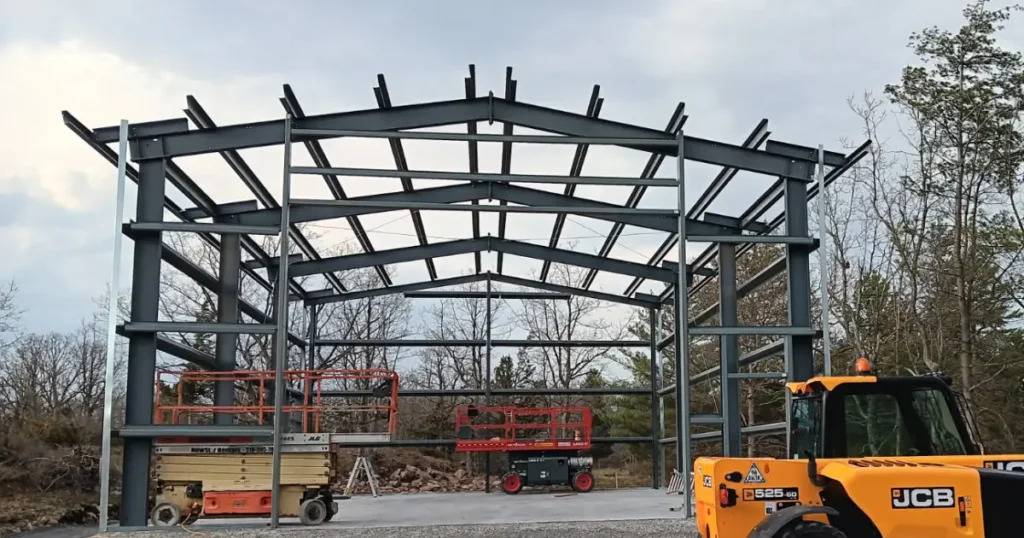
CSA Group issues the technical specifications that define acceptable steel quality for Canadian projects.
Canada CSA Steel vs China Steel Standards: What’s the Difference?
This is one of the most common questions we get from Canadian buyers. The honest answer: Chinese mills are absolutely capable of producing steel that meets CSA requirements — but you must specify this upfront and verify it with proper documentation.
China’s domestic steel standards follow the GB/T system (Guobiao, or National Standard). These differ in how chemical composition, yield strength, and testing methods are framed. They are not identical to CSA specs, but many Chinese mills have experience rolling to international standards including CSA, ASTM, and EN grades.
Where the Real Difference Shows Up
- Chemical composition – Small differences in carbon, manganese, and silicon tolerances can matter for downstream fabrication
- Mechanical testing – Yield strength and elongation reporting methods may vary
- Certification – A GB/T Mill Test Certificate is not the same as a CSA-compliant MTC
- Third-party verification – Canadian buyers typically need an independent inspection report
The table below gives a practical side-by-side overview.
CSA vs Chinese Mill Specs: Quick Reference Table
| Consideration | Canada CSA Standards | Chinese Mill Export Specs |
| Primary standard body | CSA Group (Canada) | GB/T (China National Standard) |
| Structural steel key standard | CSA G40.20/G40.21 | GB/T 700, GB/T 1591 |
| Rebar standard | CSA G30.18 | GB/T 1499.2 |
| Yield strength reporting | MPa, CSA test method | MPa, GB test method (may differ) |
| Chemical composition control | Defined per grade in CSA spec | Defined per grade in GB/T spec |
| MTC requirement | CSA-format MTC required | GB/T MTC by default; CSA format on request |
| Third-party inspection | Strongly recommended | Available via SGS, BV, or equivalent |
| Compliance for Canadian projects | Required for regulated applications | Must be specifically ordered and verified |
Note: All specifications must be confirmed against current CSA publications and the mill’s own MTC for your specific order. This table is a general orientation guide only.
Need help sourcing steel from China? Our team helps international buyers compare steel mills, verify certifications, inspect factories, confirm technical specifications, and secure mill-direct pricing before payment. Share your project requirements today for quotation support and supplier evaluation.
WhatsApp Us for Free a Consultation
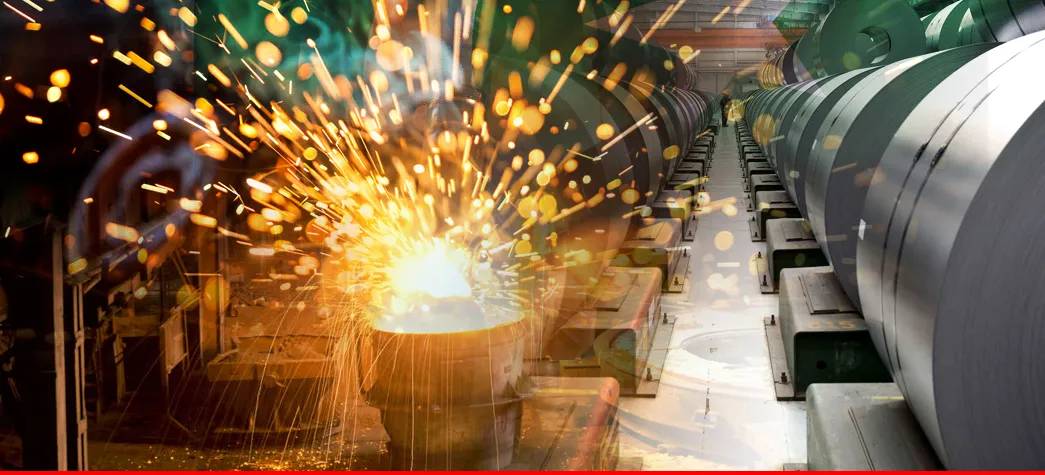
Our factory partners operate high-speed rolling mills capable of producing steel to CSA and other international standards on request.
How to Buy Steel That Meets Canada CSA Standards
Sourcing CSA-compliant steel from China is a structured process. It is not complicated, but it does require you to be precise from day one.
Step 1 — Define Your Specification
Start with the exact CSA standard your project requires. Is it G40.21 Grade 350W structural steel? CSA G30.18 rebar? Write it down before you contact any mill.
Step 2 — Find a Mill with Export Experience
Not every Chinese mill has produced to CSA grades before. Work with mills that have a record of exporting to North America. Our guide on the best steel companies in China covers what to look for in a qualified supplier.
Step 3 — Request a CSA-Format Mill Test Certificate
Ask for the MTC to be issued in a format that reflects CSA chemical and mechanical requirements — not just the domestic GB/T version. This is a standard request; experienced mills handle it regularly.
Step 4 — Schedule Third-Party Inspection
Before the steel ships, have an independent inspector (SGS, Bureau Veritas, or equivalent) verify:
- Chemical composition against your CSA grade
- Mechanical test results (yield, tensile, elongation)
- Dimensional tolerances
- Surface condition
Step 5 — Coordinate Import Documentation
Canadian customs and project engineers will want your MTC, inspection certificate, and packing list aligned. Keep all documents consistent — grade, heat number, and dimensions should match across every form.
Independent pre-shipment inspections confirm that chemical and mechanical properties match CSA grade requirements.
Common CSA Steel Grades and Price Guide (2026)
| CSA Grade | Equivalent Use | Typical Chinese Export Price (USD/ton) |
| G40.21 Grade 300W | General structural steel | $520 – $550 |
| G40.21 Grade 350W | High-strength structural | $540 – $570 |
| CSA G30.18 (400R/400W) | Reinforcing bar | $500 – $530 |
| CSA G40.21 Grade 260W | Mild structural fabrication | $510 – $540 |
Prices are indicative for 2026 and subject to change based on order volume, rolling schedule, and freight terms. Confirm pricing directly with your supplier.
Need help sourcing steel from China? Our team helps international buyers compare steel mills, verify certifications, inspect factories, confirm technical specifications, and secure mill-direct pricing before payment. Share your project requirements today for quotation support and supplier evaluation.
WhatsApp Us for Free a Consultation
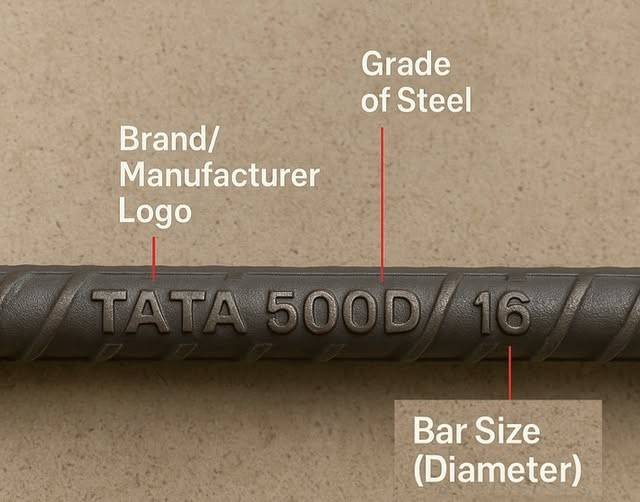
CSA-grade rebar produced at Chinese mills is clearly tagged with heat numbers and grade markings for traceability.
Packaging and Shipping to Canada
Once your steel passes inspection, the logistics process begins. Most structural steel and wire rod ships as break-bulk or containerized cargo depending on volume and product type.
Key points for Canadian imports:
- Corrosion protection – Ensure the mill applies appropriate anti-rust coating or oil film for ocean transit
- Bundle marking – Each bundle should carry the heat number, grade, and standard reference
- Port of entry – Vancouver, Montreal, and Halifax are common entry points; duties and documentation requirements apply
- Transit time – China to Canada is typically 25–35 days depending on port of loading and routing
Our success stories page includes cases where we have coordinated full shipments from Chinese mills to North American destinations with proper CSA documentation in place.
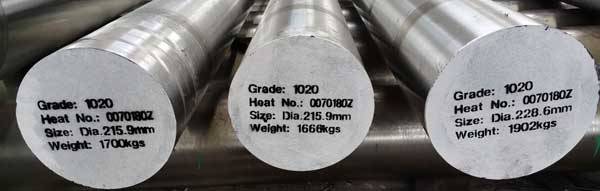
Proper labeling with heat numbers and CSA grade references ensures full traceability from mill to Canadian job site.
People Also Ask: Canada CSA Standards FAQ
What does CSA certification mean for steel?
CSA certification means the steel has been produced and tested to meet the specific chemical and mechanical requirements defined in the relevant CSA standard — such as G40.21 or G30.18. It confirms the product is suitable for regulated applications in Canada.
Can Chinese mills produce CSA-grade steel?
Yes. Many large Chinese mills have the rolling and testing capability to produce steel to CSA specifications. The key is to specify the standard in your purchase order and require a matching MTC.
Is a GB/T Mill Test Certificate acceptable for Canadian projects?
Generally no — not for regulated structural or reinforcing applications. You need an MTC that reflects CSA chemical and mechanical requirements. Ask your mill or supplier for this specifically.
How do I verify CSA compliance before shipment?
Request a CSA-format MTC and arrange third-party inspection through an accredited body like SGS or Bureau Veritas. Their report should confirm chemical composition and mechanical test results against the CSA grade you ordered.
What is the difference between CSA G40.21 Grade 300W and 350W?
The main difference is yield strength. Grade 300W has a minimum yield of 300 MPa, while Grade 350W has a minimum of 350 MPa. Both are weldable grades but used in different structural load scenarios.
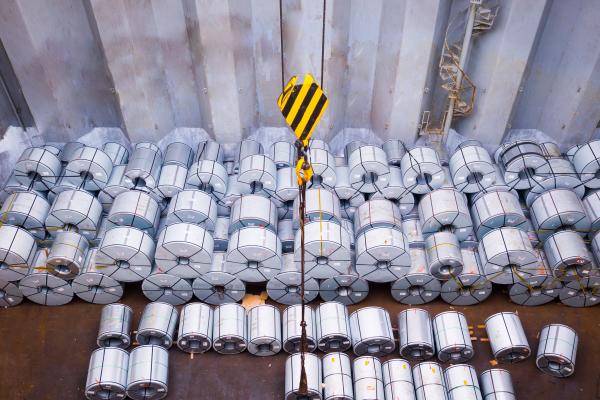
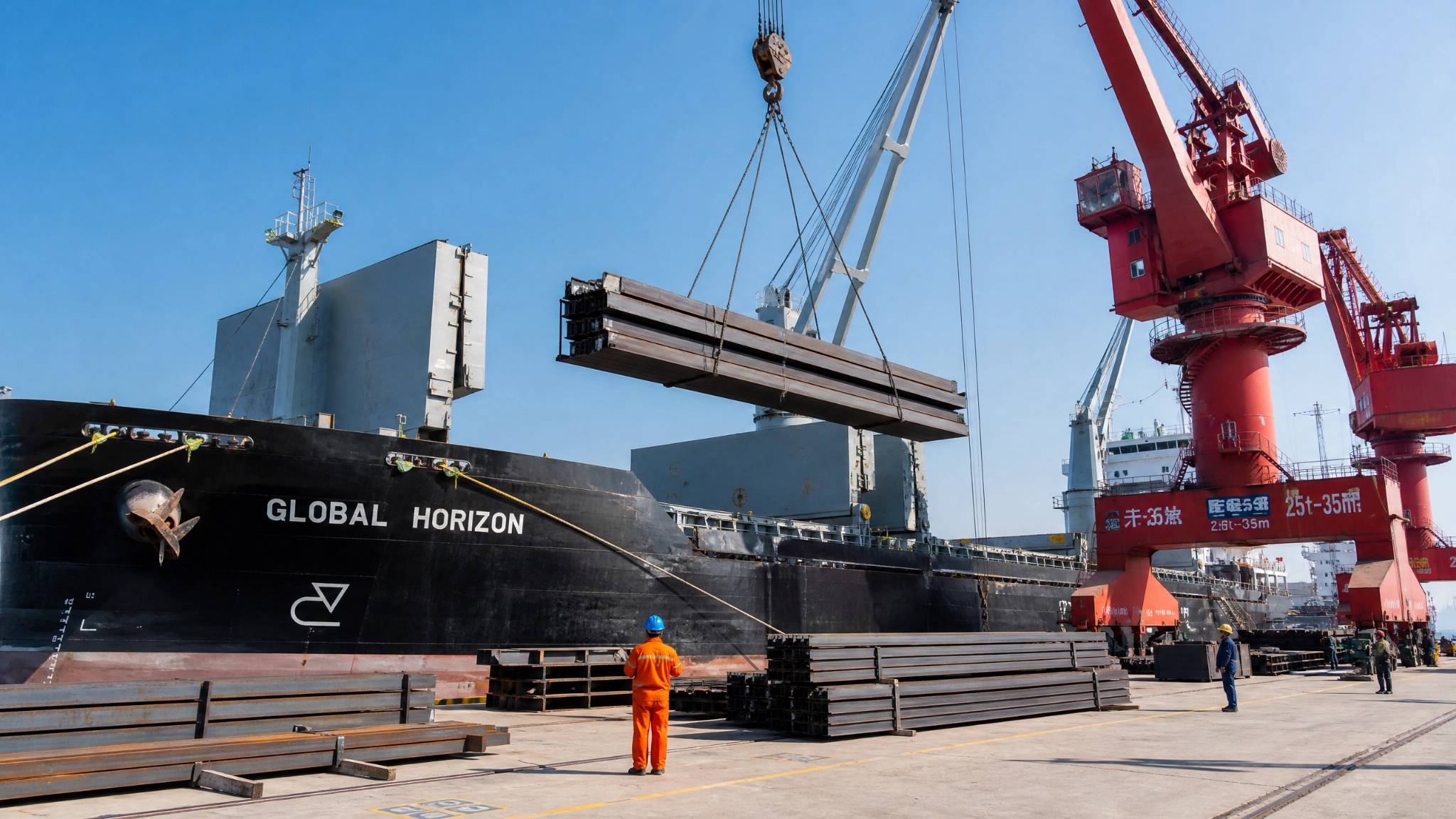
Careful loading and securing of steel bundles prevents damage during the 25–35 day ocean transit to Canadian ports.
Conclusion: Know the Standard Before You Place the Order
Canada CSA Standards exist to protect your project, your clients, and your reputation. They are not just paperwork — they define the physical performance your steel must deliver.
The good news is that sourcing CSA-compliant steel from China is entirely achievable in 2026. The process works when you specify correctly, insist on proper documentation, and verify before shipment. Skip any of those steps and you are taking on unnecessary risk.
Start with your specification. Then find a mill that can meet it — with documentation to prove it.
Our team is ready to help you at every stage, from initial grade selection through to pre-shipment inspection and shipping coordination.
Industrial Buyers: Importing Steel to China?
Are you navigating a serious steel purchase? We understand the complexities involved.
✅ Do you know your steel specifications?
✅ Are you buying in bulk?
✅ Do you need supplier verification in China?
✅ Do you need inspection before shipment?
✅ Do you need support shipping to China?
If you answered yes to these questions, you’re likely handling a significant steel procurement. Share Your Requirements with us today to streamline your import process.