
Choosing the right metal is essential for ensuring durability, performance, and cost efficiency. Two of the most commonly used materials are mild steel and galvanized iron (GI). While both are iron-based products, they differ in corrosion resistance, lifespan, and applications.
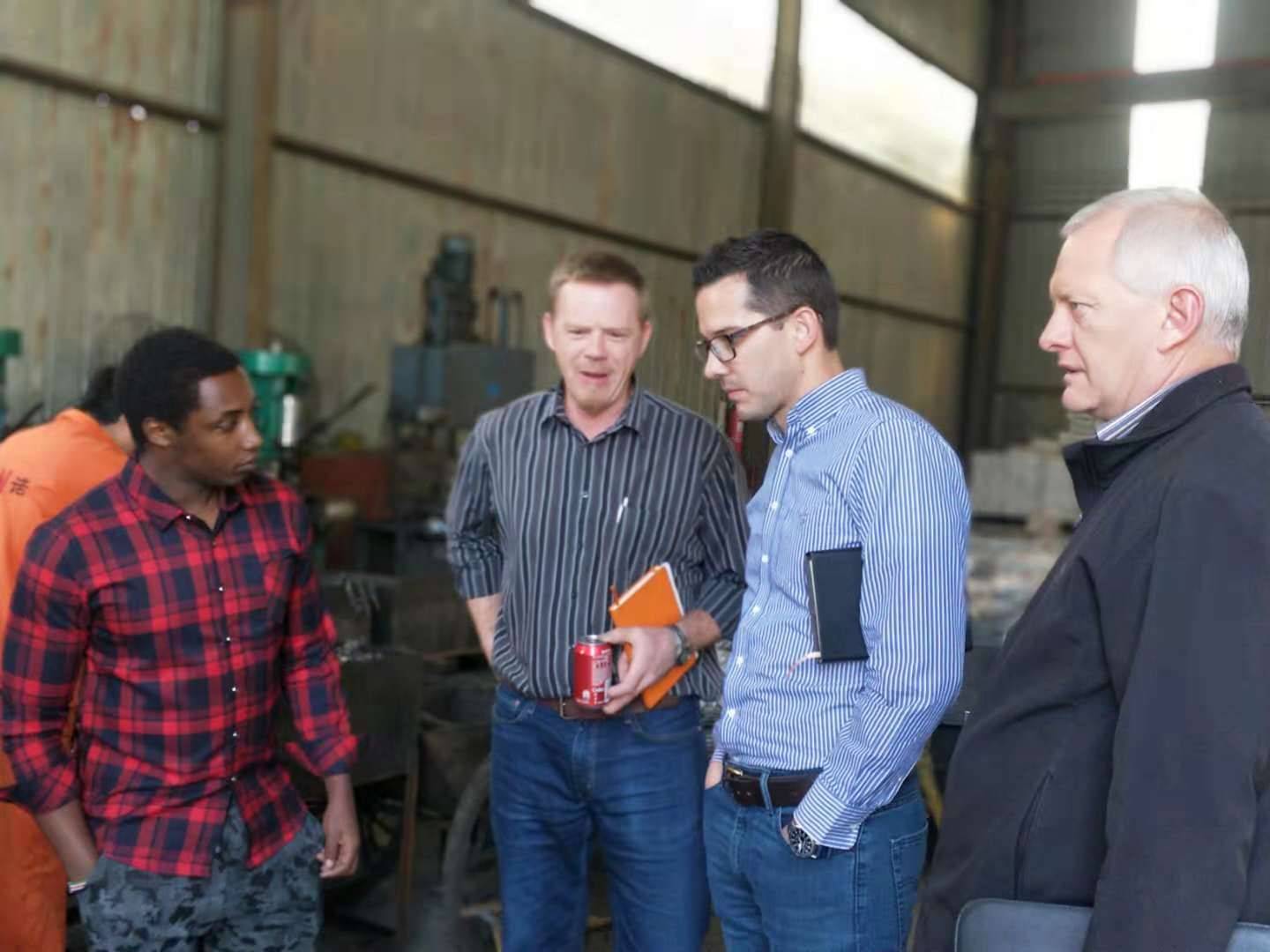
Our customers during a China visit. Collaborating on a modern construction site, highlighting the importance of material selection.
Key Differences at a Glance
- Mild Steel: Strong, versatile, and cost-effective.
- Galvanized Iron: Steel or iron coated with zinc for corrosion protection.
- Rust Resistance: GI performs better in outdoor and humid environments.
- Cost: Mild steel is generally more affordable.
- Applications: Mild steel is used in structures and machinery, while GI is preferred for roofing, fencing, pipes, and outdoor projects.
Understanding these differences helps buyers, engineers, and manufacturers choose the right material for their specific project requirements.
What is Mild Steel? The Backbone of Modern Industry
Mild steel, often referred to as low carbon steel, is arguably the most common and versatile form of steel used today. It is an alloy composed primarily of iron, with a small percentage of carbon—typically ranging from 0.05% to 0.25% by weight.This specific composition gives mild steel its unique set of properties that make it highly desirable for a vast array of applications.
Key Properties of Mild Steel
- High Malleability and Ductility:
Because of its low carbon content, mild steel is relatively soft compared to other high-carbon steels. This makes it incredibly easy to bend, shape, weld, and machine without cracking or breaking.
- Cost-Effectiveness:
Mild steel is relatively inexpensive to produce, making it an economically attractive option for large-scale projects where massive quantities of material are required.
- Magnetic Properties:
The high iron content in mild steel ensures that it retains strong magnetic properties, which is essential for certain electrical and industrial applications.
The Achilles Heel: Susceptibility to Rust
Despite its many advantages, mild steel has one significant drawback: it is highly susceptible to corrosion. When exposed to moisture and oxygen, the iron in the steel reacts to form iron oxide, commonly known as rust.
Without proper surface treatments, such as painting, powder coating, or regular maintenance, mild steel structures can degrade rapidly, compromising their strength and lifespan.
What is Galvanized Iron? The Champion of Corrosion Resistance
To combat the inherent rusting problem of iron and standard steel, the process of galvanization was developed. Galvanized iron is essentially iron or steel that has been coated with a protective layer of zinc. This zinc coating serves as a robust barrier between the underlying metal and the corrosive elements in the environment.
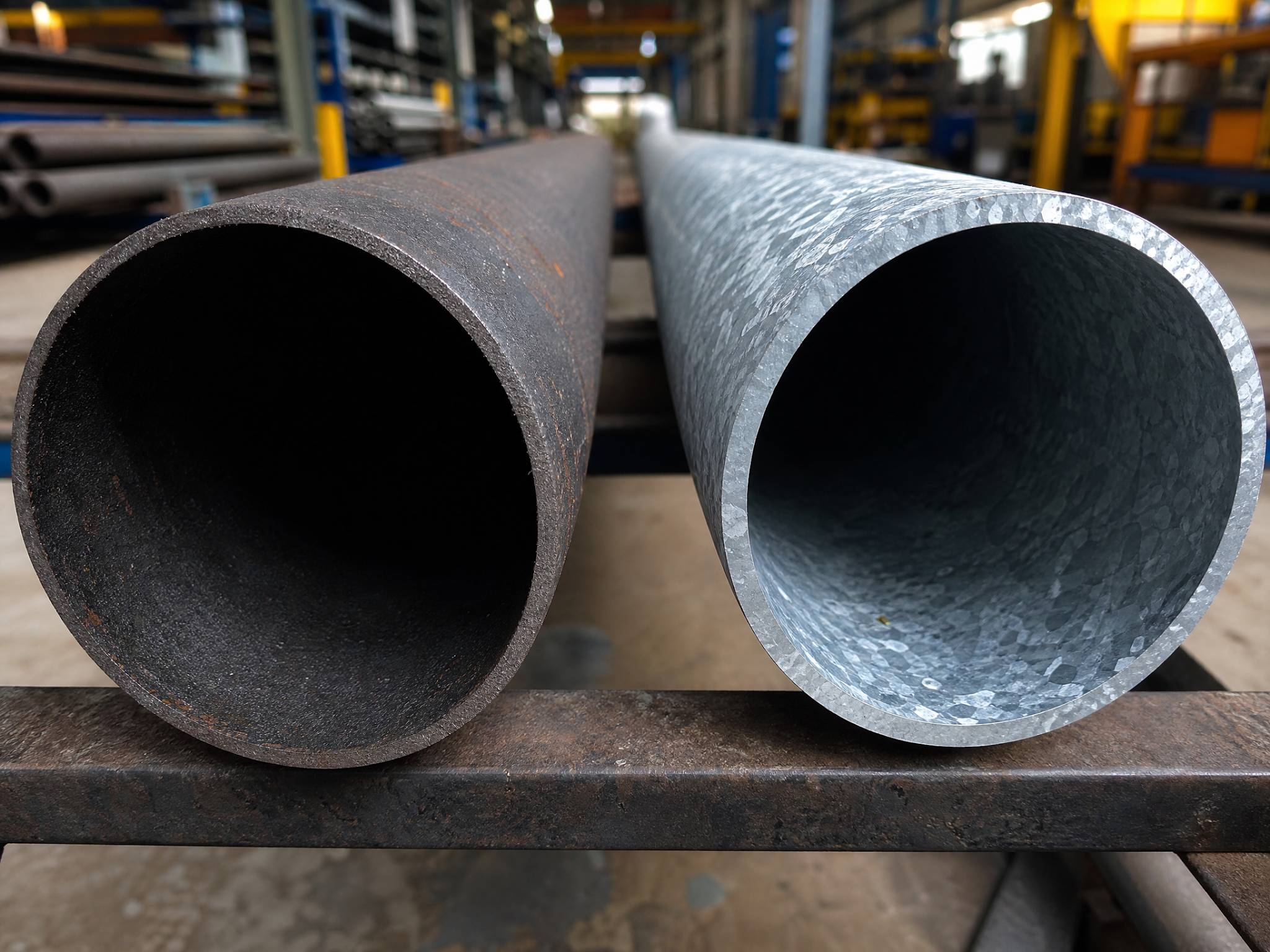
A clear visual comparison showing a dark, slightly rusted mild steel pipe next to a bright, spangled galvanized iron pipe, illustrating the difference in surface finish and corrosion resistance.
How Galvanization Protects Metal
The zinc coating protects the base metal in three primary ways:
1.Barrier Protection:
The zinc layer acts as a physical shield, preventing water, oxygen, and other corrosive substances from reaching the vulnerable iron or steel surface.
2.Sacrificial Anode:
Zinc is more reactive than iron. If the coating is scratched or damaged, the zinc will corrode first, sacrificing itself to protect the exposed iron beneath.
3.Patina Formation:
As zinc weathers, it forms a tough, insoluble patina (zinc carbonate) that further seals the surface and slows down the corrosion process.
The Manufacturing Process: Hot-Dip vs. Electro-Galvanizing
The most common method for creating galvanized iron is hot-dip galvanizing. This involves submerging the iron or steel component into a bath of molten zinc at temperatures around 450°C (842°F). This process creates a thick, durable, and tightly bonded alloy coating. Another method is electro-galvanizing, which uses an electrical current to deposit a thinner layer of zinc, often used for automotive parts where a smooth finish is required.
The Core Difference Between Galvanized Iron and Steel
When we discuss the difference between galvanized iron and steel (specifically mild steel), we are primarily comparing an uncoated alloy with a coated one. The fundamental distinction lies in their resistance to environmental degradation and their resulting longevity in specific applications.
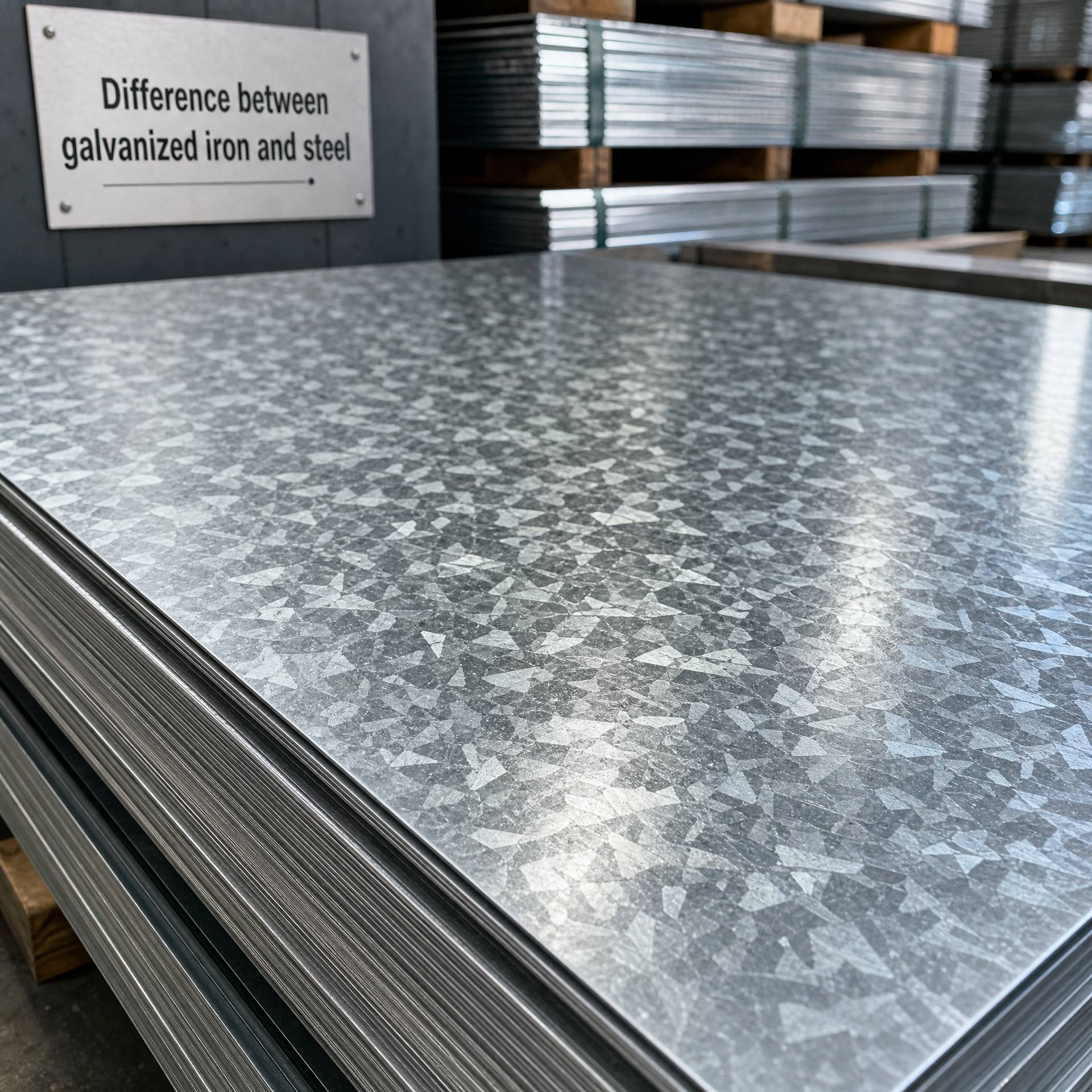
A close-up view of high-quality galvanized steel sheets, clearly showing the unique crystalline zinc coating that defines the difference between galvanized iron and steel.
1. Rust Protection: The Biggest Difference
If rust is a concern, galvanized iron has a clear advantage.
- Mild steel rusts quickly when exposed to rain, humidity, or outdoor conditions.
- It usually needs painting and regular maintenance to stay protected.
- Galvanized iron has a zinc coating that protects the metal from rust.
- It can last for many years outdoors with very little maintenance.
Best choice for outdoor use: Galvanized iron.
2. Strength
Both materials are strong, but there is an important difference.
- The zinc coating on galvanized iron does not make the metal stronger.
- It mainly acts as a protective layer against rust.
- In most cases, the base steel strength is similar.
Best choice if you need strength and rust protection: Galvanized steel.
3. Cost: Upfront vs. Long-Term
Many buyers only look at the purchase price, but maintenance costs matter too.
- Mild steel is usually cheaper to buy.
- However, it may require painting, repairs, and rust treatment over time.
- Galvanized iron costs more initially, but it often saves money on maintenance.
Best value over the long run: Galvanized iron.
4. Appearance
The two materials also look different.
Mild Steel
- Dark grey finish
- Plain industrial appearance
- Usually painted before use
Galvanized Iron
- Bright silver-grey finish
- Often has a visible crystal-like pattern called “spangle”
- Can be painted if needed
Best choice for a clean metallic look: Galvanized iron.
Applications: When to Use Mild Steel vs. Galvanized Iron
Choosing between these two materials depends entirely on the specific requirements of your project and the environment in which the metal will be used.
Ideal Uses for Mild Steel
Mild steel is best suited for indoor applications or situations where it will be completely sealed off from the elements.
- Structural Frameworks:
Used extensively in the internal skeletons of buildings where it is protected by concrete or cladding.
- Automobile Manufacturing:
The body panels and chassis of many vehicles are made from mild steel, which is then heavily primed and painted.
- Machinery and Equipment:
Used for manufacturing parts that are kept well-lubricated or operate in dry, controlled environments.
- Fencing and Gates (Painted):
Often used for decorative ironwork that will receive regular coats of protective paint.
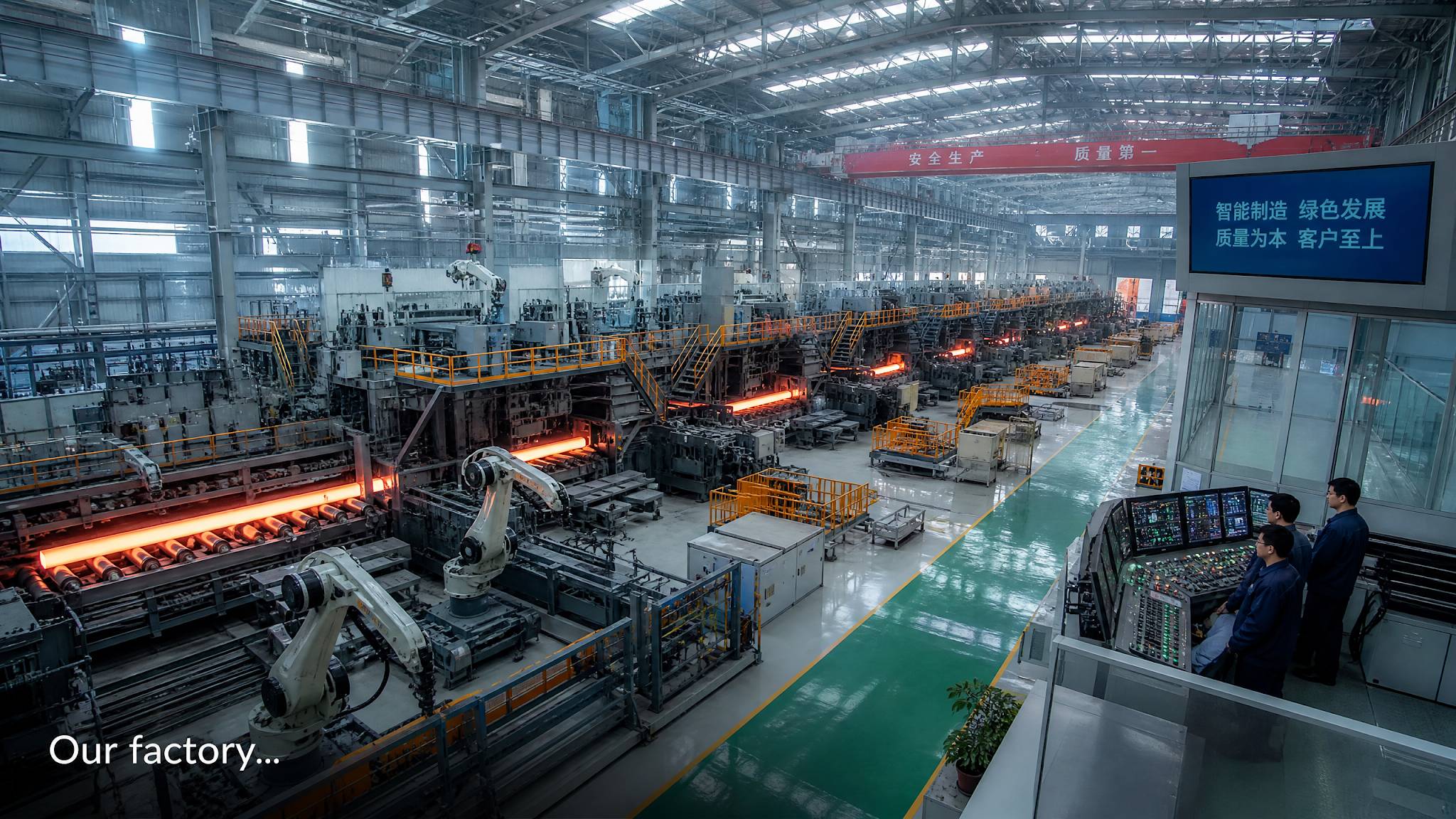
A state-of-the-art steel manufacturing facility in China, showcasing the advanced technology used to produce both high-quality mild steel and galvanized products.
Ideal Uses for Galvanized Iron
Galvanized iron shines in outdoor applications and environments where moisture is a constant threat.
- Outdoor Construction: Essential for roofing, siding, and structural components exposed to rain and snow.
- Water Pipes and Plumbing: Historically used for water supply lines due to its rust resistance, though largely replaced by copper and plastics in modern residential plumbing.
- Fencing and Guardrails: The standard choice for chain-link fences, highway guardrails, and outdoor handrails that require zero maintenance.
- Agricultural Equipment: Used for silos, troughs, and machinery exposed to harsh weather and animal waste.
Comparative Table: Mild Steel vs. Galvanized Iron
To summarize the key points, here is a quick reference guide comparing the two materials:
| Feature | Mild Steel | Galvanized Iron/Steel |
| Composition | Iron alloyed with low carbon (0.05-0.25%) | Iron or steel coated with a layer of zinc |
| Corrosion Resistance | Very Low (rusts easily without protection) | High (protected by zinc barrier and sacrificial anode) |
| Initial Cost | Lower | Higher (due to the galvanizing process) |
| Long-Term Maintenance | High (requires regular painting/coating) | Very Low (virtually maintenance-free) |
| Appearance | Dark, dull grey, often rough | Bright, silver-grey, often with a spangled pattern |
| Best Environment | Indoors, dry, or heavily protected | Outdoors, humid, or exposed to the elements |
| Common Uses | Internal structures, car bodies, machinery | Roofing, outdoor fencing, exposed structural beams |
Need help sourcing steel from China? Our team helps international buyers compare steel mills, verify certifications, inspect factories, confirm technical specifications, and secure mill-direct pricing before payment. Share your project requirements today for quotation support and supplier evaluation.
WhatsApp Us for Free a Consultation
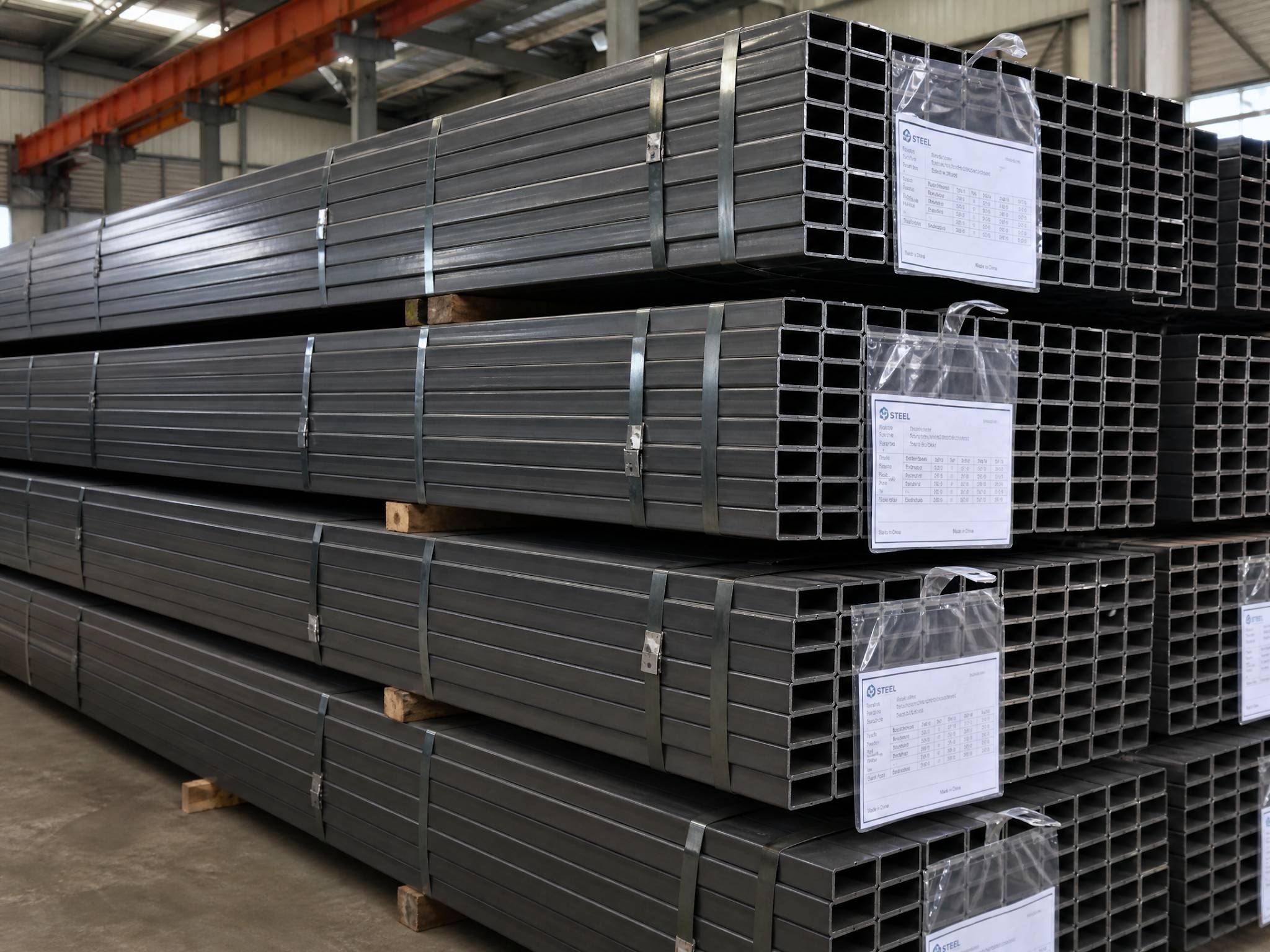
High-quality steel products, including both mild and galvanized variants, professionally packaged and labeled for secure international export.
Sourcing the Right Material for Your Project
Understanding the difference between galvanized iron and steel is the first step. The next is finding a reliable supplier who can provide the exact specifications you need. Whether you require massive quantities of mild steel for a new manufacturing plant or highly durable galvanized coils for outdoor infrastructure, partnering with the right manufacturer is crucial.
At Camasteel, we specialize in connecting international buyers with the best steel companies in China. We understand the nuances of global procurement and ensure that the materials you receive meet stringent international standards. We prioritize responsible steel sourcing, ensuring ethical and sustainable practices throughout our supply chain.
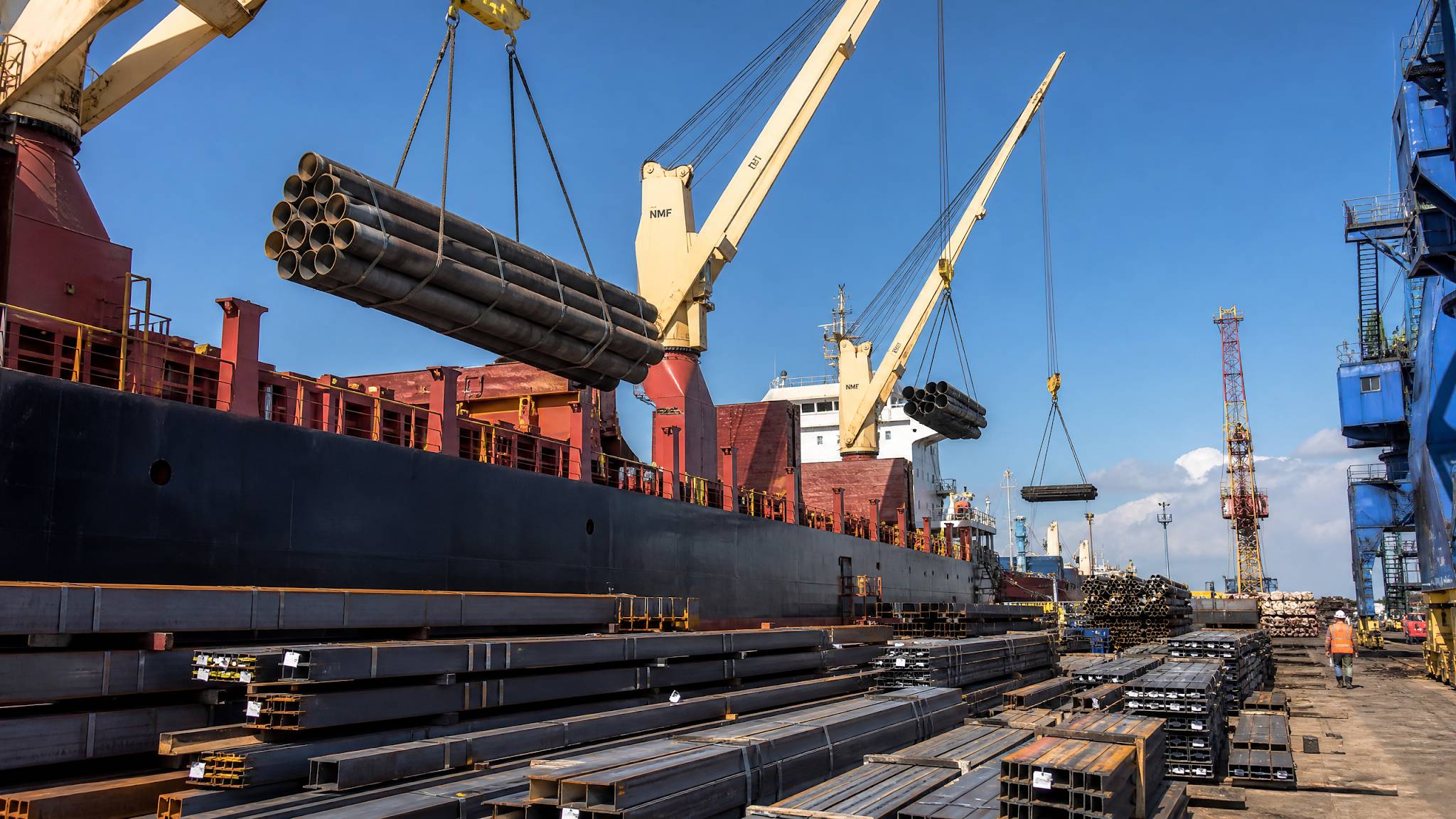
A massive cargo ship being loaded with various structural steel products, ready to deliver high-quality materials to construction projects worldwide.
Our commitment to quality and customer satisfaction is reflected in our numerous success stories, where we have helped clients navigate complex procurement challenges. Learn more about us and discover how our expertise can benefit your next project.
Frequently Asked Questions (FAQs) About Mild Steel and Galvanized Iron
Navigating the world of industrial metals can be complex. Here are some of the most common questions we receive regarding the difference between galvanized iron and steel.
Is galvanized iron stronger than mild steel?
In terms of pure tensile strength, the base metal is often very similar. However, galvanized iron is more durable in the long run because its zinc coating prevents rust from weakening the structure. Mild steel is strong initially but can lose its integrity quickly if it begins to corrode.
Can you weld galvanized iron?
Yes, you can weld galvanized iron, but it requires special precautions. The welding process vaporizes the zinc coating, which can produce toxic fumes. It is essential to work in a well-ventilated area and wear appropriate respiratory protection. Additionally, the welded area must be treated with a zinc-rich paint to restore corrosion resistance.
How long does galvanized iron last compared to mild steel?
In outdoor environments, galvanized iron can last 20 to 50 years or more without significant maintenance. In contrast, unprotected mild steel can begin to show signs of heavy rust within just a few months of exposure to moisture, potentially failing within a few years if not properly maintained.
Is galvanized iron more expensive than mild steel?
Yes, the initial purchase price of galvanized iron is typically higher than mild steel due to the added cost of the galvanization process. However, when you consider the long-term savings on maintenance, painting, and replacement, galvanized iron is often the more cost-effective choice for long-term projects.
Can I paint over galvanized iron?
Absolutely! While galvanized iron has a distinct silver-grey look, it can be painted to match your project’s aesthetic. However, you must use a specific primer designed for galvanized surfaces to ensure the paint adheres correctly and doesn’t peel off over time.
Which Material Should You Choose?
The right choice depends on where and how the metal will be used.
Choose Mild Steel If:
- You need the lowest upfront cost.
- The project is indoors or in a dry environment.
- The steel will be painted or protected from moisture.
- Easy fabrication and welding are important.
Choose Galvanized Iron If:
- The material will be used outdoors.
- The project is exposed to rain, humidity, or harsh weather.
- You want better rust protection.
- You prefer lower maintenance costs over the long term.
- A longer service life is a priority.
Quick Decision Guide
- Need the cheapest option? → Mild Steel
- Need protection from rust? → Galvanized Iron
- Building something outdoors? → Galvanized Iron
- Using it indoors in a dry area? → Mild Steel
- Want the lowest lifetime maintenance cost? → Galvanized Iron
Final Takeaway
The biggest difference between mild steel and galvanized iron is rust resistance. Mild steel is more affordable initially, while galvanized iron costs more upfront but offers better protection against corrosion and typically lasts longer in outdoor environments.
For most outdoor structures, galvanized iron is usually the smarter long-term investment. For indoor applications where moisture is not a concern, mild steel often provides the best value for money.
Industrial Buyers: Importing Steel to China?
Are you navigating a serious steel purchase? We understand the complexities involved.
✅ Do you know your steel specifications?
✅ Are you buying in bulk?
✅ Do you need supplier verification in China?
✅ Do you need inspection before shipment?
✅ Do you need support shipping to China?
If you answered yes to these questions, you’re likely handling a significant steel procurement. Share Your Requirements with us today to streamline your import process.