
When you’re ready to buy rebar for a major construction project, the sheer scale of the global market can be overwhelming. China, as the world’s leading producer, offers an incredible variety of options, but navigating the prices and suppliers requires a strategic approach. In 2026, the industry has shifted towards higher-strength grades and more sustainable production, making it the perfect time to refine your procurement strategy. This guide will walk you through everything you need to know to source the best rebar efficiently and cost-effectively.

Professional project managers collaborating on-site to ensure high-quality rebar implementation for structural integrity.
Why You Should Buy Rebar from China in 2026
China’s dominance in the steel industry isn’t just about volume; it’s about the sophisticated infrastructure and technological advancements that have made it a global hub for high-quality building materials. When you choose to buy rebar from Chinese manufacturers, you’re tapping into a supply chain that accounts for over half of the world’s production. This massive scale translates into competitive pricing and a vast array of specifications that can meet any project’s needs.
Unmatched Production Capacity and Variety
The variety of rebar available in China is truly impressive. From standard carbon steel to specialized earthquake-resistant grades, Chinese mills produce it all. This means you can find exactly what you need, whether it’s for a small residential build or a massive infrastructure project. The ability to source diverse products from a single region simplifies logistics and can significantly reduce your overall project costs.
Understanding Rebar Grades and Specifications
Before you buy rebar, it’s crucial to understand the different grades and what they mean for your project’s structural integrity. In 2026, the focus has increasingly moved toward high-strength and high-ductility options that offer better performance and material savings. Choosing the right grade can not only ensure safety but also help you stay within budget by reducing the total amount of steel required.
Common Rebar Grades in the Chinese Market
The most common grades you’ll encounter when looking to buy rebar from China are based on the GB/T 1499.2-2018 standard. Understanding these will help you communicate effectively with suppliers and ensure you’re getting the right material for your specific application.
- HRB400 / HRB400E:
This is the workhorse of the industry. The “E” stands for Earthquake, indicating enhanced ductility, which is mandatory for seismic-resistant structures. It offers a yield strength of 400 MPa.

HRB400 / HRB400E steel rebar coil – the standard grade for general construction and seismic applications.
HRB500 / HRB500E:
A higher-strength option with a 500 MPa yield strength. Using HRB500 can reduce the total steel weight in a project by up to 20% compared to HRB400, leading to significant cost savings.

HRB500 / HRB500E high-strength rebar coils – ideal for projects requiring reduced steel weight and higher performance.
ASTM A615 Grade 60:
Often requested by international buyers, this US standard is roughly equivalent to HRB400 in terms of yield strength (approx. 415 MPa).

ASTM A615 Grade 60 deformed rebar – internationally recognized grade for high-quality reinforced concrete structures.
Technical Specifications Table
| Parameter | Details |
| Material Grades | HRB400, HRB400E, HRB500, HRB500E, ASTM A615 Grade 60 |
| Diameter Range | 6mm to 50mm |
| Standard Lengths | 6m, 9m, 12m (Customizable up to 14m) |
| Surface Finish | Deformed (Ribbed) for superior concrete bonding |
| Certifications | ISO 9001, GB/T 1499.2, Mill Test Certificate (MTC) |
How industrial buyers safely source container-scale rebar from China
Buying rebar from China may seem simple, but large orders often involve serious risks—fake suppliers, wrong steel grades, false Mill Test Certificates, delayed shipments, and payment loss before production starts. For project-scale procurement, a structured sourcing process is essential to protect quality, budget, and delivery timelines.
Step 1: Define Your Project Requirements
The first step to buy rebar successfully is to have a clear understanding of your needs. This includes the total tonnage, specific grades (like HRB500E for seismic areas), and the required diameters and lengths. Being precise at this stage prevents costly errors later on. You might also want to consider responsible steel options if your project has sustainability goals.
Step 2: Identify and Vet Reliable Suppliers
Finding the right partner is perhaps the most critical step. Look for suppliers with a proven track record and the ability to provide comprehensive documentation. Leading companies like those mentioned in our best steel companies in China pillar page are excellent starting points. Always verify their certifications and, if possible, check their success stories to see how they’ve handled similar orders.

Professional engineers performing quality control in a modern Chinese steel production facility.
Step 3: Compare Suppliers Beyond the Quoted Price
Many buyers make the mistake of choosing the lowest rebar quote without checking who is actually behind it. In China, a low price can mean a trader posing as a mill, inconsistent steel grades, weak documentation, or serious delivery risks. Real supplier evaluation requires more than comparing price sheets—it means verifying mill ownership, checking production capability, confirming certifications, and reducing payment risk before any deposit is sent. For large rebar purchases, supplier verification matters far more than the cheapest offer.
Need help sourcing steel from China? Our team helps international buyers compare steel mills, verify certifications, inspect factories, confirm technical specifications, and secure mill-direct pricing before payment. Share your project requirements today for quotation support and supplier evaluation.
WhatsApp Us for Free a Consultation
Inside the Rebar Manufacturing Process
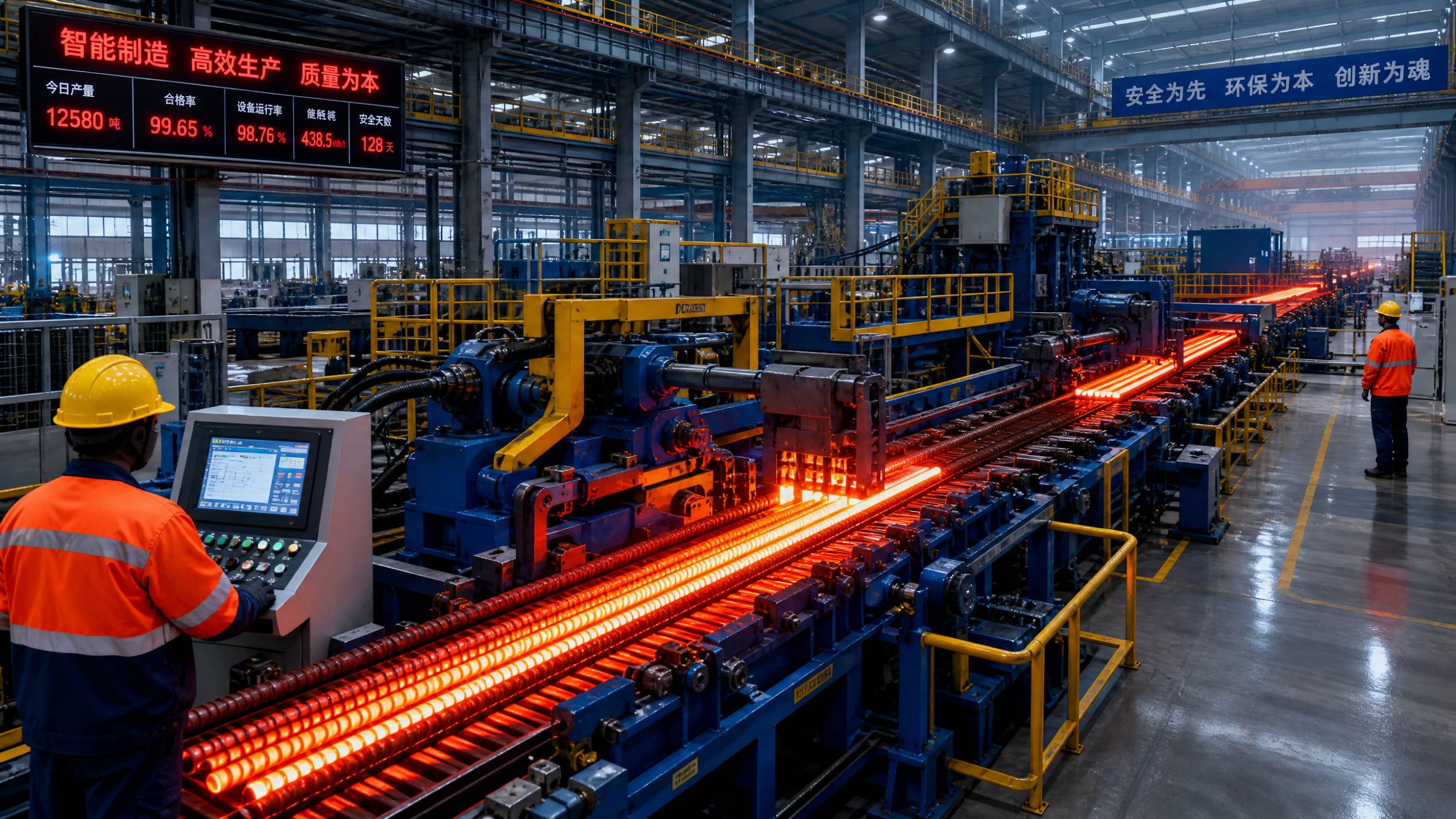
Our factory utilizes state-of-the-art automated technology to produce high-precision rebar with consistent mechanical properties.
Understanding how the rebar you’re about to buy is made can give you confidence in its quality. Modern Chinese mills use advanced thermo-mechanical treatment (TMT) processes to create bars with a hard outer shell and a ductile core. This unique combination provides the high strength and excellent bendability required for modern construction.
Quality Control and Testing
Every batch of rebar should undergo rigorous testing before it leaves the factory. This includes tensile tests to verify yield and ultimate strength, as well as bend tests to ensure the bars won’t crack during fabrication. When you buy rebar, always insist on receiving a Mill Test Certificate (MTC) that matches the heat numbers on the actual bars. This is your guarantee of quality and traceability.
Rebar Prices in 2026: What to Expect

Precision-engineered deformed rebar designed for maximum bonding strength with concrete in structural applications.
Pricing is always a top concern when you’re looking to buy rebar. In 2026, prices in China have remained relatively stable but are influenced by global raw material costs and seasonal demand. Generally, you can expect prices to range between $430 and $600 per metric ton, depending on the grade, size, and total volume of your order.
Factors Influencing Rebar Costs
Several factors can impact the final price you pay when you buy rebar:
- Raw Material Prices: The cost of iron ore and steel scrap is a primary driver.
- Energy Costs: Steel production is energy-intensive, so fluctuations in power prices can affect the bottom line.
- Order Volume: Bulk orders almost always qualify for significant discounts.
- Logistics and Freight: Shipping costs can vary based on the destination and the current state of the global shipping industry.
Logistics: Packaging and Shipping Your Rebar

Meticulous packaging and organized storage ensure that your rebar remains in perfect condition during transit.
Once you’ve decided to buy rebar, the next challenge is getting it to your site safely. Proper packaging is essential to prevent damage and corrosion during the long journey across the ocean. Most rebar is shipped in bundles of 2 to 3 tons, securely strapped with steel bands and clearly labeled for easy identification.
Efficient Shipping from Chinese Ports

Leveraging China’s world-class port infrastructure to ensure timely and efficient global delivery of your rebar orders.
Many international buyers rely only on documents and emails when arranging rebar shipments from China. However, real procurement security often requires factory visits, production checks, port coordination, and local verification before cargo leaves the mill. For large rebar orders, on-the-ground support helps reduce delays, quality issues, and costly shipping mistakes.
People Also Ask:
What is the difference between HRB400 and HRB400E?
The “E” in HRB400E stands for “Earthquake.” This grade is specifically manufactured with higher ductility and stricter chemical controls to ensure it can withstand the intense stresses of seismic events without brittle failure. If your project is in a seismic zone, you should definitely buy rebar with the “E” designation.
Can I buy rebar that meets both Chinese and International standards?
Yes, many top Chinese mills produce rebar that is dual-certified. For example, it’s common to find bars that meet both the Chinese GB/T 1499.2 and the American ASTM A615 Grade 60 standards. This makes it much easier for international buyers to source high-quality material that complies with their local building codes.
How do I verify the quality of the rebar I buy?
The most reliable way is to request a Mill Test Certificate (MTC) for every batch. You can also arrange for third-party inspections by reputable organizations like SGS or BV. These inspectors will visit the factory, witness the testing, and verify that the rebar meets all your specified requirements before it’s shipped.
What are the typical payment terms when buying rebar from China?
Common terms include a 30% deposit via T/T (Telegraphic Transfer) with the balance paid against the Bill of Lading (B/L), or an irrevocable Letter of Credit (L/C) at sight. These terms provide a balance of security for both the buyer and the seller.
Conclusion: Secure Large Rebar Procurement with the Right Controls
China remains one of the best places to source rebar for large construction and industrial projects due to its strong mill capacity, wide grade availability, and competitive pricing. However, large-volume procurement also comes with serious risks—trader misrepresentation, incorrect steel grades, fake certifications, payment exposure, and shipment problems can create major project losses.
Before placing a large steel order, buyers should verify that the supplier is a real mill, confirm certifications and production capability, conduct factory checks where possible, and ensure proper testing before export. For high-value rebar purchases, supplier verification and quality control are just as important as price. This is where experienced sourcing support helps protect both your project and your capital.
Industrial Buyers: Planning to Buy Steel from China?
✅ Do you know your steel specifications?
✅ Are you buying large quantities of steel?
✅ Do you need support to check if your supplier is a real steel mill (not trader)?
✅ Do you need factory verification before you pay a large deposit?
✅ Do you need pre-shipment inspection to make sure the steel grade is correct?
If yes, you may be handling a serious steel purchase. [Share Your Requirements]