
Keyword: grinding balls vs. steel grinding rod
If your business runs a ball mill, rod mill, or SAG mill, the grinding media you choose directly affects your operating costs and output quality. The two most common options are forged grinding balls and steel grinding rods — and picking the wrong one is an expensive mistake.
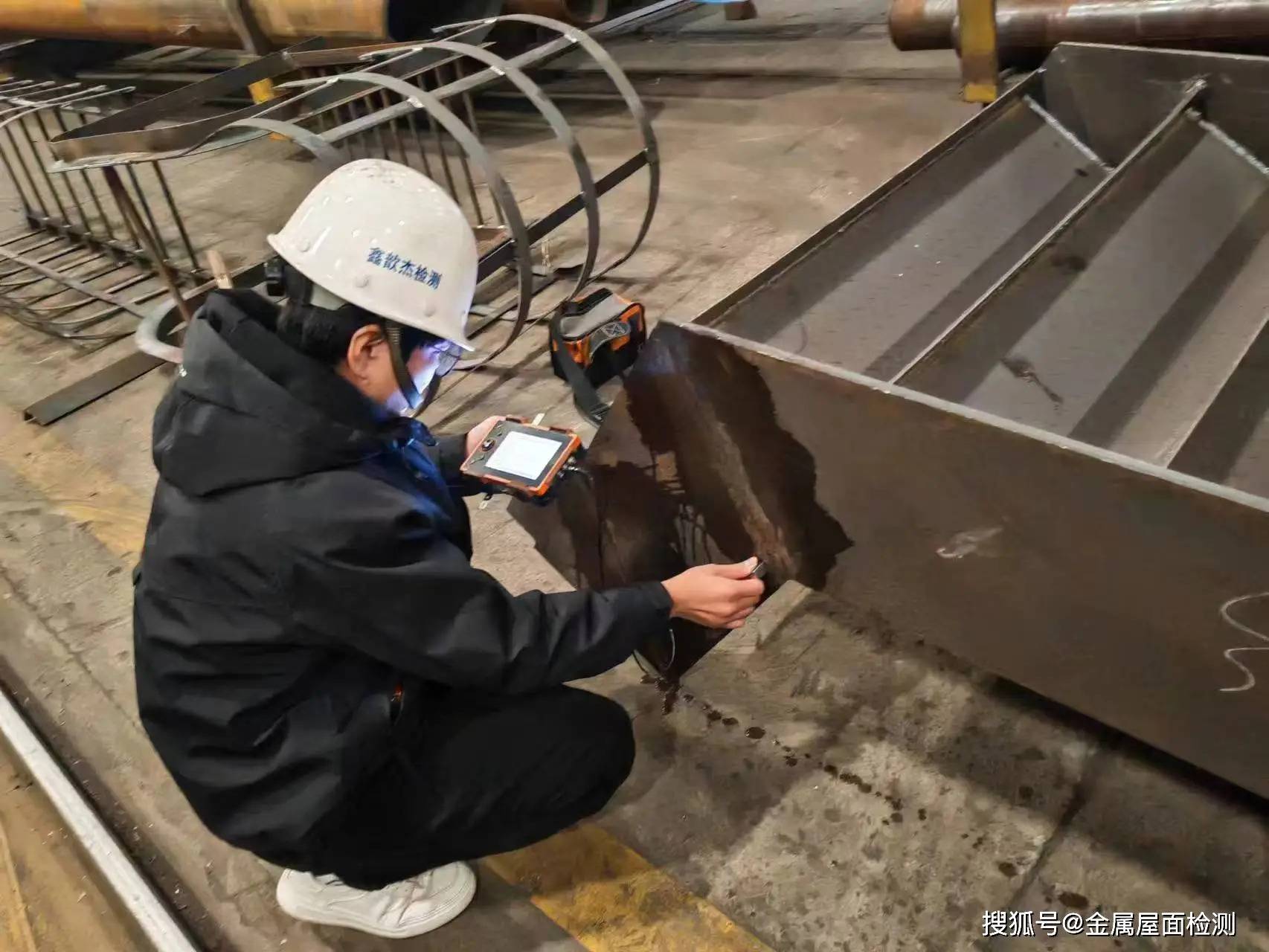
A quality control check at one of our partner mills ensures every batch of grinding media meets export specifications.
This guide breaks down both products clearly, covering materials, performance, applications, and pricing. We source both from responsible steel producers in China, so you get consistent quality with full documentation.
What Is Grinding Media? A Quick Overview
Grinding media refers to the steel shapes placed inside rotating mills. Their job is simple — crush and grind ore, minerals, or other materials into finer particles.
Two forms dominate the market:
- Forged grinding balls — spherical, used in ball mills and SAG mills
- Steel grinding rods — cylindrical, used in rod mills
Both are made from high-carbon or alloy steel, but their shape changes everything about how they perform.
What Are Forged Grinding Balls?
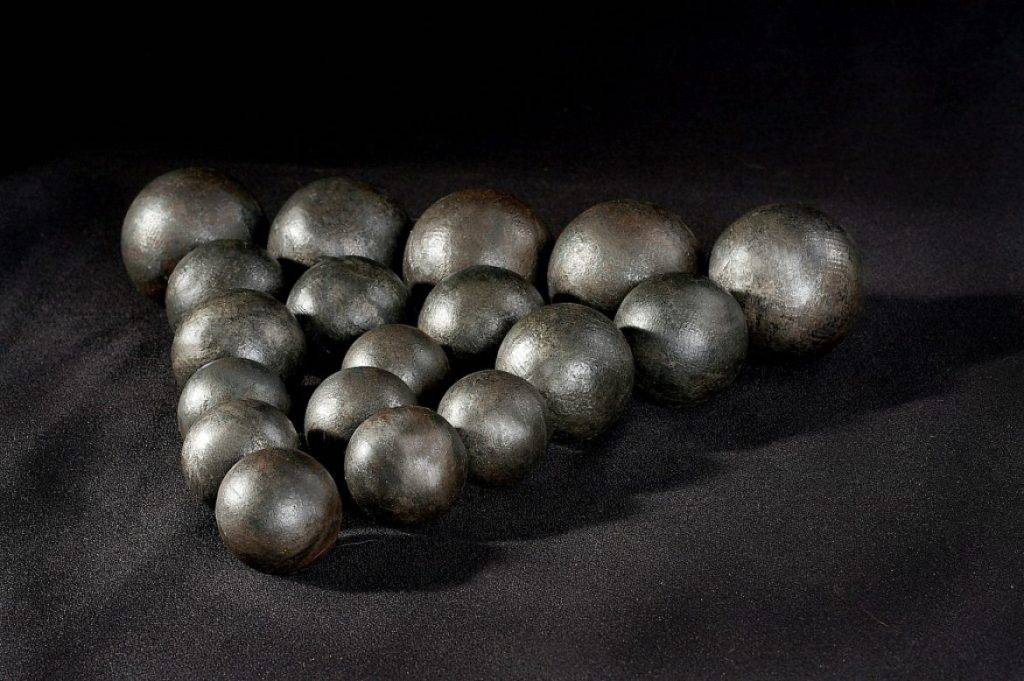
Forged grinding balls ranging from 50mm to 120mm — the most widely used grinding media in mining and cement operations.
Forged grinding balls are produced by heating a steel billet and then forging it into a sphere under high pressure. This process gives the ball a dense, uniform microstructure with no internal porosity.
Key Properties of Forged Grinding Balls
- Surface hardness: Typically 58–65 HRC
- Core hardness: 55–62 HRC (no soft core problem common in cast balls)
- Impact resistance: High — handles heavy mill loads without cracking
- Wear rate: Low — longer service life per ton of material ground
Common Applications
- Mining operations (gold, copper, iron ore)
- Cement grinding plants
- Coal pulverizing mills
- Mineral processing facilities
The consistent hardness throughout the ball means it wears evenly. You get more grinding cycles per ball compared to cast alternatives.
What Is a Steel Grinding Rod?
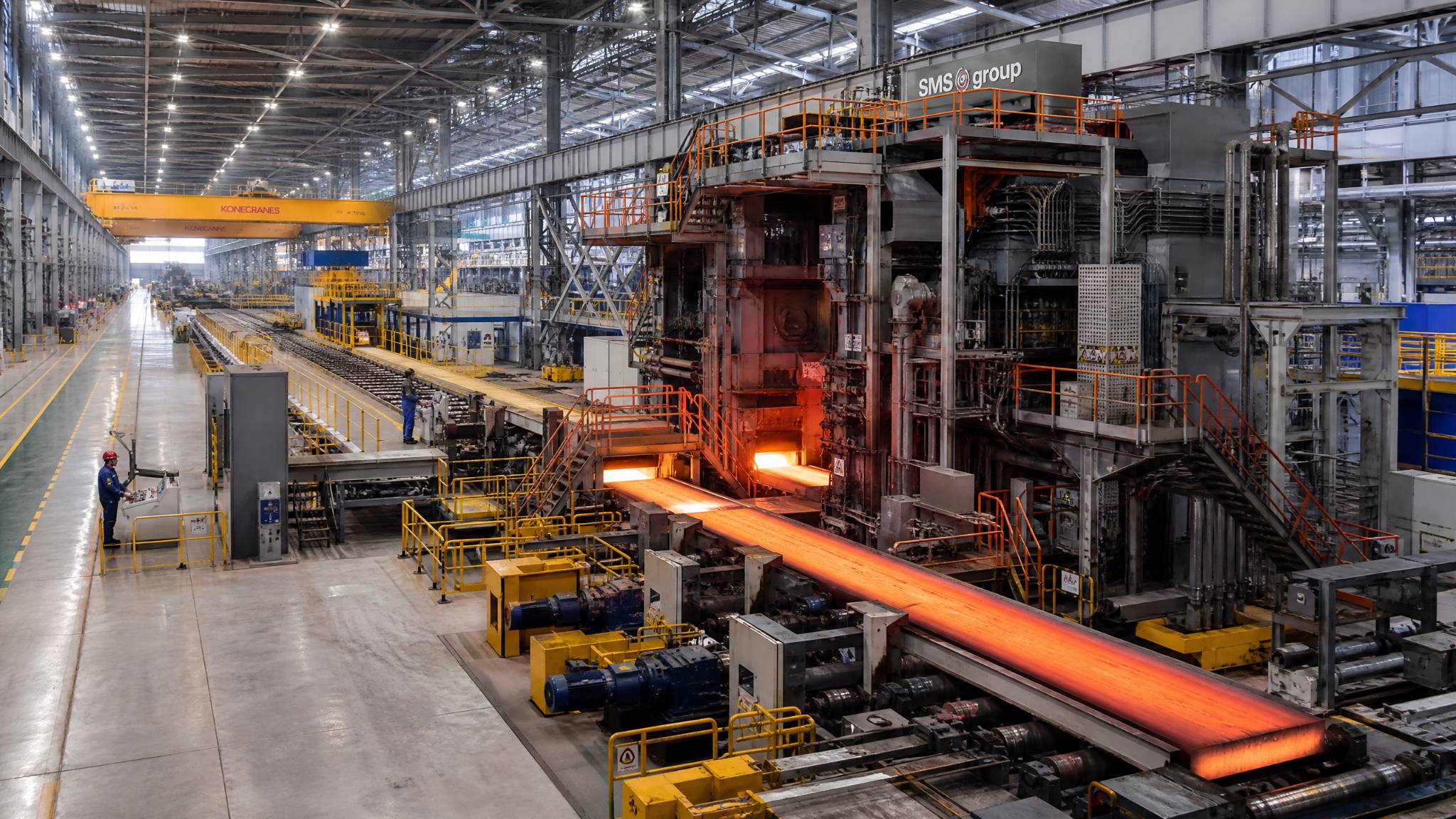
Our factory partners produce steel grinding rods using controlled hot-rolling processes for consistent diameter and hardness.
A steel grinding rod is a cylindrical bar of high-carbon steel, typically 25mm to 100mm in diameter and cut to match the length of the rod mill. Where grinding balls create point-to-point contact with material, grinding rods create line contact — which changes the grind profile completely.
Key Properties of Steel Grinding Rods
- Material: High-carbon steel (typically C45, C60, or equivalent)
- Hardness: 45–55 HRC surface hardness
- Length tolerance: Matched precisely to mill internal length
- Grinding action: Line contact produces a coarser, more selective grind
Common Applications
- Primary grinding of minerals before ball mill stages
- Silica sand and quartz processing
- Tin, tungsten, and tantalum ore grinding
- Applications requiring minimal over-grinding
Rod mills are often used as the first stage of grinding. They reduce large feed particles more selectively than balls — which matters when you need a specific particle size distribution.
Forged Grinding Balls vs. Steel Grinding Rod: Side-by-Side Comparison
| Feature | Forged Grinding Balls | Steel Grinding Rod |
| Shape | Spherical | Cylindrical |
| Contact Type | Point contact | Line contact |
| Surface Hardness | 58–65 HRC | 45–55 HRC |
| Typical Diameter | 20mm – 150mm | 25mm – 100mm |
| Mill Type | Ball mills, SAG mills | Rod mills |
| Grind Output | Fine to very fine | Coarse to medium |
| Wear Rate | Low | Moderate |
| Cost Range (USD/ton) | $550 – $900+ | $480 – $750+ |
| Best For | Mining, cement, coal | Primary mineral grinding |
Pricing varies based on quantity, steel grade, and delivery terms. Contact us for mill-direct pricing.
Need help sourcing steel from China? Our team helps international buyers compare steel mills, verify certifications, inspect factories, confirm technical specifications, and secure mill-direct pricing before payment. Share your project requirements today for quotation support and supplier evaluation.
WhatsApp Us for Free a Consultation
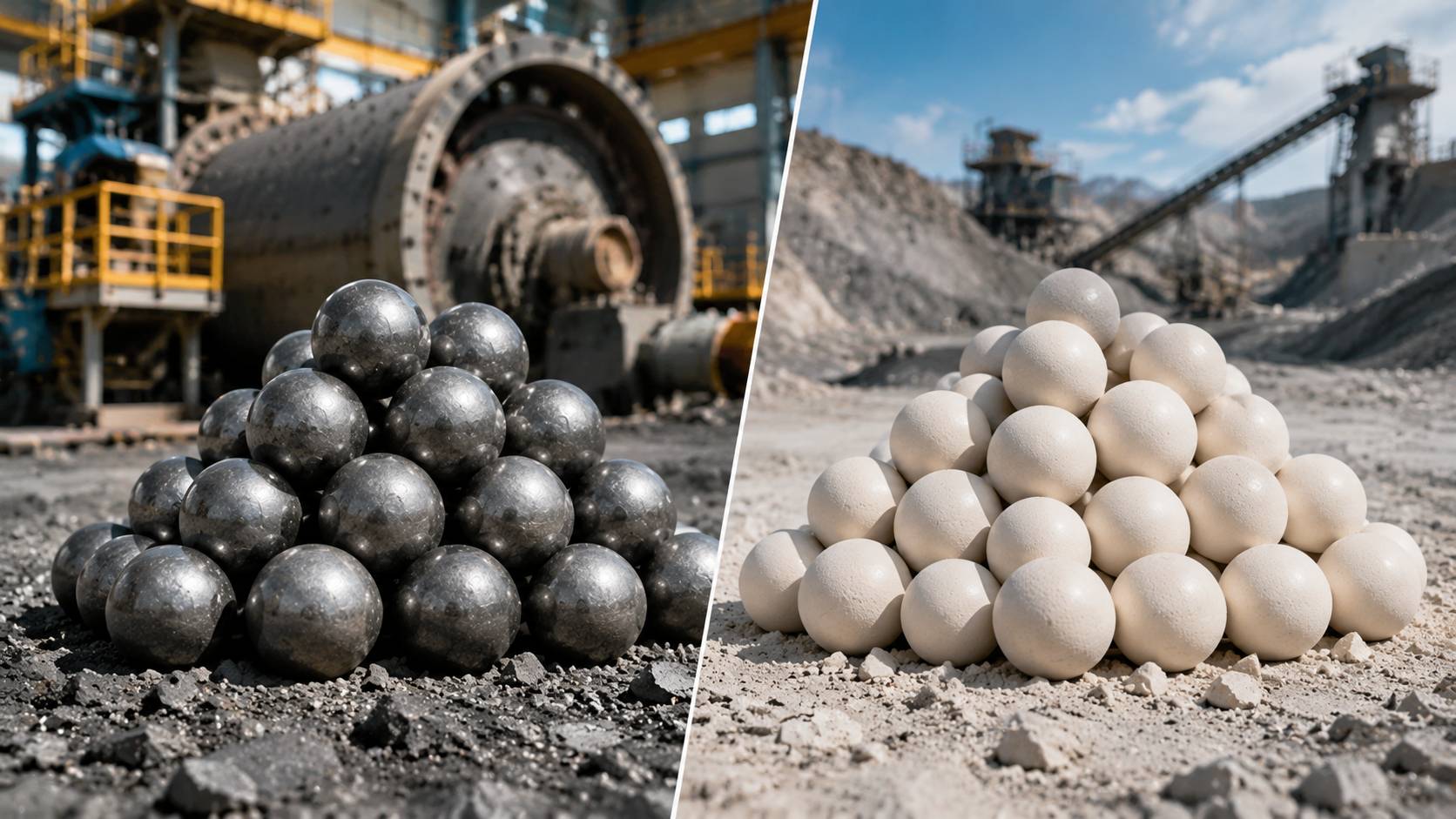
A quick visual comparison of the two most common grinding media types used in mining and mineral processing.
Which Grinding Media Should You Choose?
This is the question that matters most. Here is a straightforward way to decide:
Choose forged grinding balls if:
- You run a ball mill or SAG mill
- You need fine or ultra-fine particle output
- Your operation runs at high tonnage and impact loads
- You want the lowest cost per ton of material ground
Choose steel grinding rods if:
- You run a rod mill for primary grinding
- You need to control particle size tightly (avoid over-grinding)
- Your feed material requires selective, coarser reduction
- You process silica, quartz, or similar materials
Still unsure? Our team has helped buyers across Africa, Southeast Asia, and South America match the right grinding media to their specific mill configurations. Read how we support industrial buyers.
Why Source Grinding Media from China in 2026?
China produces the majority of the world’s forged grinding balls and steel grinding rods. The main reasons buyers come to China:
- Scale — mills produce thousands of tons per month
- Price — mill-direct pricing is significantly lower than local distributors
- Quality — leading mills hold ISO 9001 certification and export globally
- Range — full size ranges available from a single supplier
When you work with verified mills, you also get proper Mill Test Certificates (MTCs) and can request third-party inspection through agencies like SGS before shipment.
Camasteel works directly with audited Chinese mills to help international buyers get quality grinding media at competitive prices — without the sourcing risk.
Sourcing Grinding Media: Step-by-Step
Follow these steps for a smooth purchase:
- Define your mill type — ball mill, rod mill, or SAG mill
- Specify diameter and quantity — in millimeters and metric tons
- Request the steel grade — high-carbon or alloy based on hardness requirement
- Ask for a Mill Test Certificate — confirms chemical and mechanical properties
- Arrange third-party inspection — before container loading
- Confirm shipping terms — FOB, CIF, or CFR based on your port
Shipping and Logistics for Grinding Media
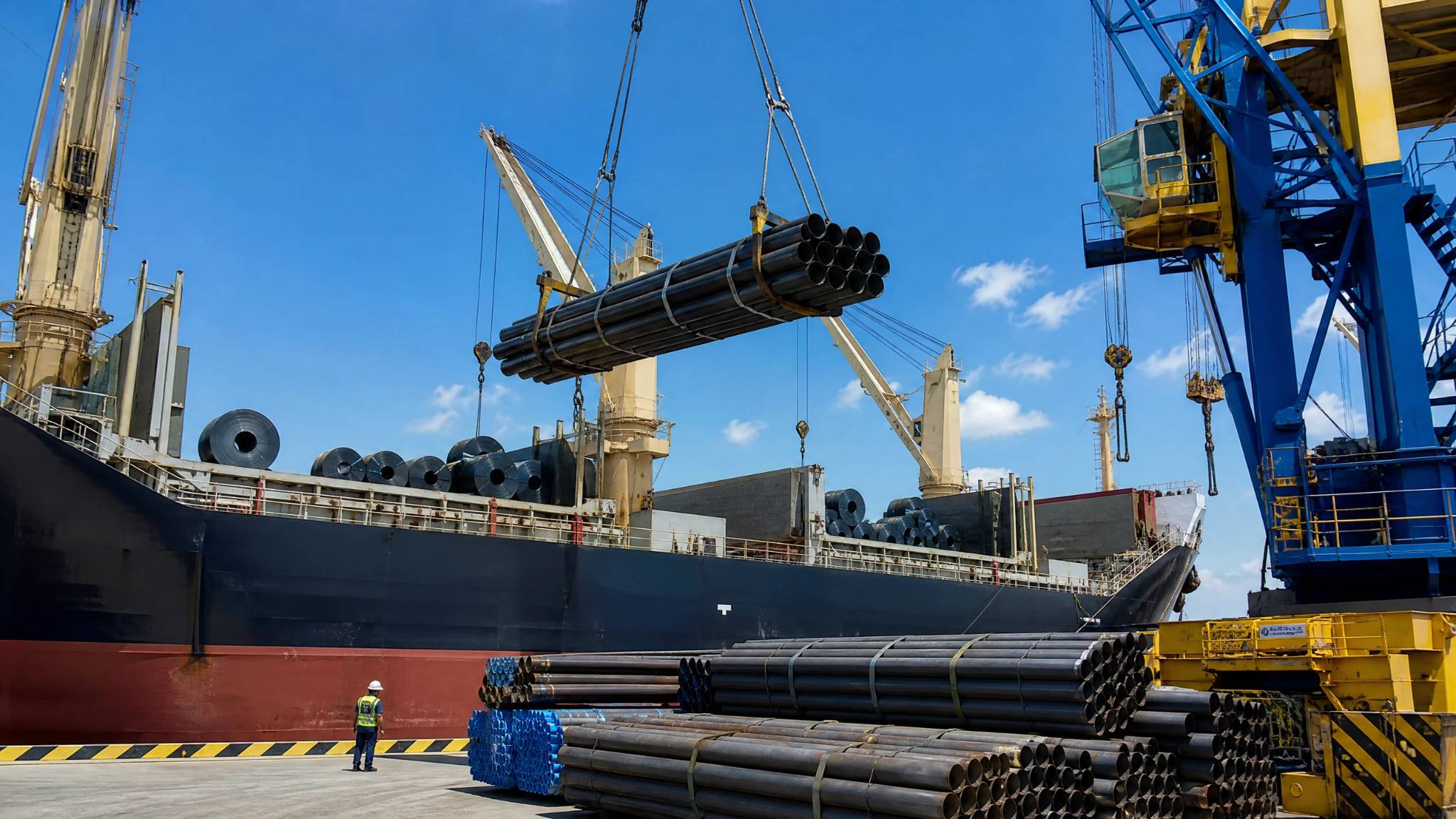
Our logistics team manages every detail from mill gate to destination port, ensuring secure and on-time delivery.
Grinding balls are typically packed in steel drums, big bags (1-ton jumbo bags), or directly bulk-loaded into containers. Steel grinding rods are bundled and strapped for break-bulk or container shipment.
Most buyers load 20–25 tons of grinding balls per 20ft container. Grinding rods, depending on length, may require flat-rack containers or careful arrangement inside standard containers.
Proper documentation — packing list, commercial invoice, certificate of origin, and MTC — is essential for smooth customs clearance at your destination port. Our team at Camasteel handles this paperwork as standard.
People Also Ask: Grinding Media FAQ
What is the difference between forged and cast grinding balls?
Forged balls are produced by hot forging a steel billet, giving a uniform, dense microstructure with high surface and core hardness. Cast balls are poured in molds and often have internal porosity or a softer core — leading to higher breakage rates in heavy-impact mills.
How long do steel grinding rods last in a rod mill?
Service life depends on the ore hardness, mill speed, and rod quality. High-quality rods from ISO-certified Chinese mills typically last between 200 and 600 hours of mill operation, though this varies by application.
Can I use grinding balls and rods in the same mill?
No. Ball mills and rod mills are mechanically different. Using rods in a ball mill — or balls in a rod mill — causes uneven wear, reduced grinding efficiency, and potential mill damage.
What steel grade is best for grinding media?
For most mining applications, high-carbon grades (equivalent to C60 or higher) provide the right balance of hardness and toughness. Alloy steel grades with chromium or molybdenum additions are used for very abrasive ores.
How do I verify the quality of grinding media before shipment?
Request a Mill Test Certificate (MTC) from the supplier and hire a third-party inspection company — such as SGS or Bureau Veritas — to conduct Brinell/Rockwell hardness testing and visual inspection before loading.
Conclusion: Forged Grinding Balls or Steel Grinding Rod — Make the Right Call
Both forged grinding balls and steel grinding rods are excellent products when matched to the right application. The wrong choice costs you in wear rates, energy consumption, and inconsistent particle sizes.
If you run a ball mill or SAG mill at high throughput — forged grinding balls are the answer. If you need primary grinding with controlled particle size in a rod mill — steel grinding rods are your product.
The good news is that China’s top mills produce both, at scale, with full quality documentation.
At Camasteel, our sourcing team helps you identify the right grinding media grade, verify the supplier, arrange inspection, and manage the shipment from mill to port. We work only with mills that meet responsible steel standards and have a track record of reliable international exports.
Contact us today to get a free, no-obligation quote for your grinding media requirement.
Industrial Buyers: Importing Steel to China?
Are you navigating a serious steel purchase? We understand the complexities involved.
✅ Do you know your steel specifications?
✅ Are you buying in bulk?
✅ Do you need supplier verification in China?
✅ Do you need inspection before shipment?
✅ Do you need support shipping to China?
If you answered yes to these questions, you’re likely handling a significant steel procurement. Share Your Requirements with us today to streamline your import process.