
Importing steel to South Africa requires more than finding a supplier. Buyers must manage SABS compliance, ITAC import rules, anti-dumping duties, and supplier verification before placing large orders. Large infrastructure, mining, energy, and manufacturing projects continue to drive steel demand in South Africa, especially for structural sections, rebar, plates, pipes, and galvanized steel. For bulk imports, the biggest risks are non-compliant steel grades, fake mill documentation, delayed customs clearance, and unexpected duty costs.
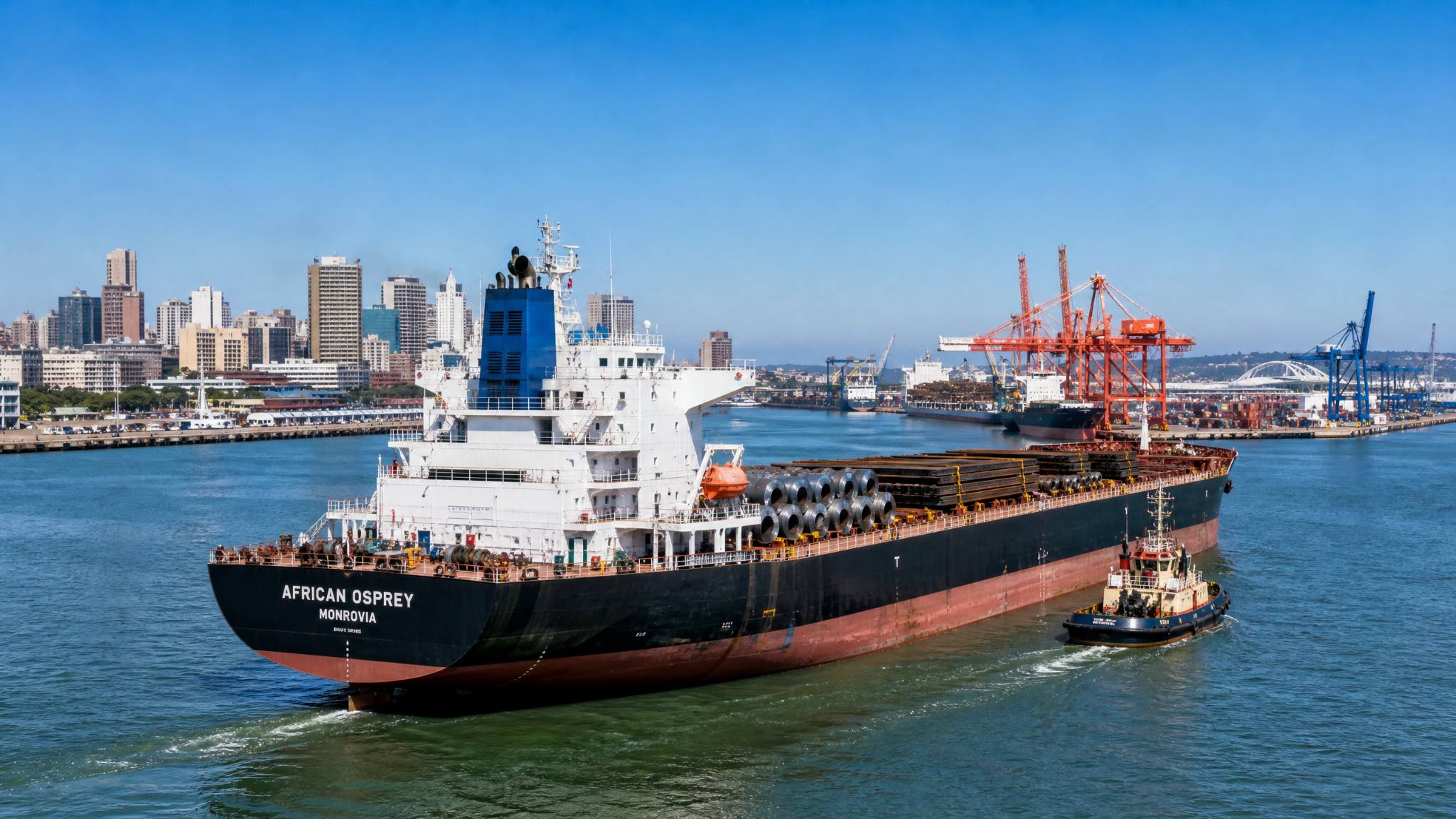
The Port of Durban remains the primary gateway for high-volume steel imports, serving as a critical hub for the South African construction and manufacturing sectors in 2026.
Local supply does not always cover project volume, delivery timelines, or specialized grades, which is why many industrial buyers source steel directly from China.Chinese mills are often used for large-volume procurement, but buyers must verify whether the supplier is a real mill, whether the steel meets SANS standards, and whether export documents are genuine.
For serious procurement, supplier verification, factory audits, pre-shipment inspection, and proper ITAC planning are often more important than price negotiation.
The Current State of the South African Steel Market
In 2026, the South African steel market is characterized by a strategic shift toward high-performance and specialized materials. While domestic demand has stabilized, the industry is focusing on modernization and meeting international quality benchmarks. This evolution is driven by the need for more durable and efficient structural components in large-scale projects.
Understanding these market trends is crucial for any business looking to secure a reliable supply chain. The best steel companies in China have become key partners for South African firms, offering a wide range of products that complement local production.
For high-value orders, buyers should focus on compliance, mill verification, and shipment control instead of relying only on quotations and email communication.
Key Drivers of Steel Demand in 2026
The primary drivers of steel demand in South Africa include massive energy infrastructure upgrades and the expansion of the regional transport network. These projects require vast quantities of structural steel, rebar, and specialized piping. The ability to source these materials in bulk, often through international imports, is essential for maintaining project timelines and budgets.
The Role of Specialized Imports
Specialized imports are increasingly used to fill technical gaps in the local supply chain. Whether it’s high-strength alloys for the mining sector or corrosion-resistant plates for coastal infrastructure, international sourcing provides access to a broader technological base. This focus on quality and innovation is a core part of our responsible steel commitment.

Professional physical inspection are mandatory steps in the 2026 procurement process to ensure all imported steel meets South African safety codes.
Understanding SABS Standards and Compliance
For any steel product to be used in South African construction or manufacturing, it must comply with the South African Bureau of Standards (SABS) requirements. These standards, such as SANS 1431 for structural steel, are designed to ensure the safety and longevity of the country’s built environment. Non-compliant steel is a major risk factor.
In 2026, the SABS framework has been updated to include more rigorous testing for chemical composition and mechanical performance. Every batch of imported steel must be accompanied by a valid Mill Test Certificate (MTC) that demonstrates full compliance with these updated SANS codes. Missing SABS compliance or incorrect import permits can create major project delays, rejected shipments, and significant financial loss.
The Importance of SANS 1431 Compliance
SANS 1431 is the benchmark for structural steel in South Africa, covering everything from mild steel to high-strength grades. Ensuring that your supplier understands the nuances of these standards is vital. Working with experienced procurement partners ensures that every ton of steel delivered meets these exact professional requirements.
Third-Party Verification and SABS Marks
For major industrial projects, we highly recommend independent third-party verification. This involves on-site inspections and laboratory testing to confirm that the steel’s properties match the MTC. Proactive verification is the only way to protect your project from the risks associated with sub-standard materials in the global market.
2026 South Africa Steel Specification and Price Reference Table
| Product Category | Relevant SANS Standard | Common Grades | Estimated Price (ZAR/tonne) |
| Structural Sections | SANS 1431 | 300WA, 350WA | R 18,500 – R 22,000 |
| Steel Plate | SANS 1431 | S275JR, S355JR | R 17,000 – R 20,500 |
| Reinforcing Bar | SANS 920 | 250N, 500N | R 14,500 – R 17,000 |
| Galvanized Sheet | SANS 3575 | Z275, Z450 | R 22,000 – R 26,000 |
| Seamless Pipe | SANS 62 | Medium, Heavy | R 24,000+ |
Need help sourcing steel from China? Our team helps international buyers compare steel mills, verify certifications, inspect factories, confirm technical specifications, and secure mill-direct pricing before payment. Share your project requirements today for quotation support and supplier evaluation.
WhatsApp Us for Free a Consultation
Navigating ITAC Regulations and Duties
The International Trade Administration Commission of South Africa (ITAC) plays a central role in regulating steel imports through tariffs and anti-dumping measures. In 2026, these regulations are designed to balance the need for competitive imports with the protection of the domestic manufacturing base. Understanding these costs is vital for accurate budgeting.
The Impact of Anti-Dumping Duties
Anti-dumping duties can significantly affect the final landed cost of specific steel products, such as certain types of wire rod or structural sections. These duties are often country-specific and are reviewed regularly by ITAC. Buyers must stay informed about the latest rulings to avoid unexpected financial exposure during the import process.
Import Permits and ITAC Certificates
Most steel products require a specific import permit from ITAC before they can be cleared through South African customs. Obtaining these permits requires detailed technical information and a clear justification for the import. Professional procurement support can streamline this process, ensuring all regulatory hurdles are cleared before the shipment arrives.

Advanced Chinese mills utilize sophisticated automated machinery to ensure that every structural section produced for the South African market meets the exact SANS 1431 specifications.
How to Buy Steel for South Africa: A Procurement Guide
Buying steel in bulk for the South African market requires a structured and disciplined approach. In 2026, the process has become more complex due to increased regulatory oversight and quality demands. Follow this professional guide to ensure your steel procurement is efficient, compliant, and cost-effective.
1. Precise Technical Specification
Start by defining your requirements using the exact SANS codes. Don’t just ask for “structural steel”; specify the grade (e.g., 350WA), the dimensions, and any specific testing requirements. Clear and detailed specifications are the only way to ensure the supplier provides the correct material for your project.
2. Comprehensive Supplier Verification
Only work with manufacturers who have a proven history of successfully exporting to South Africa. Ask for previous SABS-compliant MTCs and evidence of international quality certifications. A thorough factory audit is highly recommended for large-scale orders to verify the mill’s actual production capabilities.

Efficient customs clearance is crucial for timely steel imports, requiring meticulous documentation and expert coordination between all parties.
3. Implement Pre-Shipment Inspection
Never allow a shipment to leave the factory without a third-party inspection. This inspection should verify the quantity, dimensions, surface quality, and marking of the steel. Ensuring the SABS marks are correctly applied and the MTC matches the physical goods is a critical step in protecting your investment.
4. Coordinate Professional Logistics
Work with an experienced clearing and forwarding agent who understands the nuances of the South African port system. Ensure all documentation is perfectly aligned with ITAC requirements and customs regulations. Proper planning will prevent costly delays at the Port of Durban or Cape Town.

Efficient port handling and secure loading are essential to maintain the structural integrity of heavy steel bundles during the long-haul sea voyage to South African ports.
People Also Ask: South Africa Steel FAQ
What is the difference between 300WA and 350WA steel?
These are grades of structural steel defined by SANS 1431. 300WA has a minimum yield strength of 300 MPa, while 350WA has a higher minimum yield strength of 350 MPa. 350WA is often used in more demanding structural applications where higher load-bearing capacity is required without increasing the weight of the steel.
How long does it take to ship steel from China to South Africa?
The typical transit time for sea freight from major Chinese ports to the Port of Durban is between 25 to 35 days. However, you must also factor in production lead times, port handling, and customs clearance, which can add several weeks to the total procurement timeline for large orders.
Do I need a special license to import steel into South Africa?
Yes, most steel products require an import permit from ITAC. Additionally, the importer must be registered with the South African Revenue Service (SARS) as an importer. Ensuring all these registrations and permits are in place before the steel arrives is vital to avoid significant delays and penalties.
Conclusion: Navigating the Future of South African Steel
The South African steel industry in 2026 offers both challenges and significant opportunities for those who understand its complexities. By prioritizing SABS compliance, navigating ITAC regulations with care, and leveraging high-quality global imports, you can build a resilient and cost-effective supply chain.
At Camasteel, we are dedicated to helping our South African clients achieve their goals through expert procurement support and world-class steel products. Whether you are building a new mine or upgrading the national grid, our team is ready to help you succeed. Contact us today for a professional consultation on your next order.
Industrial Buyers: Importing Steel to Mexico?
Are you navigating a serious steel purchase? We understand the complexities involved.
✅ Do you know your steel specifications?
✅ Are you buying in bulk?
✅ Do you need supplier verification in China?
✅ Do you need inspection before shipment?
✅ Do you need support shipping to Mexico?
If you answered yes to these questions, you’re likely handling a significant steel procurement. Share Your Requirements with us today to streamline your import process.