
When you are buying pre-painted steel for roofing, appliances, or cladding, two products come up every single time — PPGI v. PPGL. They look similar in the catalogue. They are both color-coated. They are both sold in coils. But they are not the same product, and picking the wrong one can cost you in durability, rework, or budget overrun.
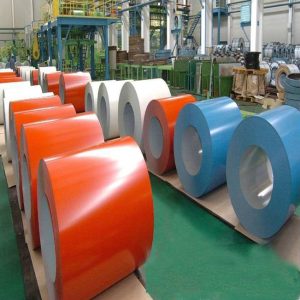
Choosing between PPGI and PPGL starts with knowing what each coating is designed to do.
At Camasteel, we work with responsible steel sourcing practices and help international buyers make technically sound decisions before they place an order. This guide breaks down exactly what PPGI and PPGL are, where they differ, which applications suit each product, and how to choose between them in 2026.
What Are PPGI and PPGL? A Quick Definition
Both products start life as flat-rolled steel coil. The difference is in the metallic coating that sits between the steel substrate and the colored paint layer.
PPGI — Pre-Painted Galvanized Iron
The substrate is galvanized steel, which means it carries a layer of pure zinc. That zinc layer acts as a sacrificial barrier — it corrodes before the base steel does, protecting the structural integrity of the sheet.
PPGL — Pre-Painted Galvalume Steel
The substrate here is galvalume steel, coated with an alloy of approximately 55% aluminum, 43.4% zinc, and 1.6% silicon. That aluminum content is the key difference. It gives the sheet a much denser, more stable barrier against both corrosion and heat.
Both products then receive a primer coat and a top coat of polyester, PVDF, or another paint system before being shipped as finished coils.
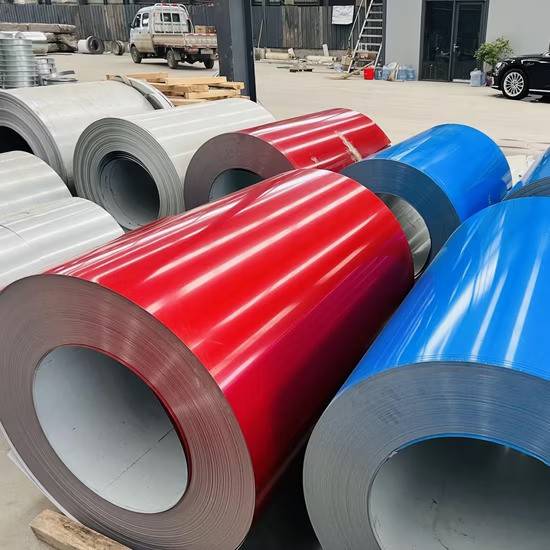
The metallic coating layer is the critical difference between PPGI and PPGL performance.
PPGI v. PPGL: Key Differences at a Glance
| Property | PPGI | PPGL |
| Metallic Coating | Pure Zinc (GI base) | 55% Al / 43.4% Zn / 1.6% Si |
| Corrosion Resistance | Good | Superior (Al-Zn barrier is denser) |
| Heat Resistance | Up to ~230°C | Up to ~315°C |
| Surface Finish | Slightly rougher | Smoother (Al improves adhesion) |
| Weight (same thickness) | Heavier per m² | Slightly lighter (Al is less dense than Zn) |
| Cut-Edge Protection | Better (Zn self-heals cut edges) | Weaker at cut edges |
| Price Difference | Baseline | Typically 5–12% higher than PPGI |
| Color Range | Very wide | Wide (slightly fewer specialty tones) |
| Common Standard | EN 10346, ASTM A653 | EN 10346, ASTM A792 |
The Coating Chemistry — Why It Matters
Most buyers focus on the paint color. The coating underneath the paint is what actually determines how long the sheet lasts in the field.
Zinc in PPGI is electrochemically active. When the sheet is scratched or cut, the zinc migrates toward the exposed steel and forms a protective layer. This is called cathodic protection, and it is why PPGI handles cut edges and site damage well.
Aluminum in PPGL forms a tight, stable oxide layer on the surface. That layer resists oxidation and blocks heat transfer far more effectively than zinc alone. The trade-off is that aluminum does not self-heal at cut edges the way zinc does. If you are roll-forming or cutting PPGL heavily on site, you need to account for that.
Corrosion Resistance: Where PPGL Pulls Ahead
In standard salt-spray testing, PPGL typically shows a meaningfully longer service life than PPGI of the same thickness and paint system. The dense aluminum-zinc alloy layer slows the rate at which moisture reaches the base steel.
This makes PPGL the preferred choice for:
- Coastal environments where salt air is constant
- Industrial zones with elevated chemical exposure
- Agricultural buildings exposed to fertilizer fumes and humidity
- Long-span roofing where replacement is expensive
PPGI is not a weak product in corrosion terms. For inland construction, standard residential roofing, and appliance skins, it performs reliably and costs less.
Heat Resistance: A Critical Factor for Specific Uses
If your application involves sustained heat — industrial ovens, roofing in extreme-sun climates, or proximity to heat-generating equipment — PPGL handles elevated temperatures more stably.
PPGI can soften or discolor at temperatures above roughly 230°C. PPGL maintains its coating integrity to around 315°C. For most roofing and wall cladding applications this does not come into play. For industrial and agricultural dryer equipment, it is a deciding factor.
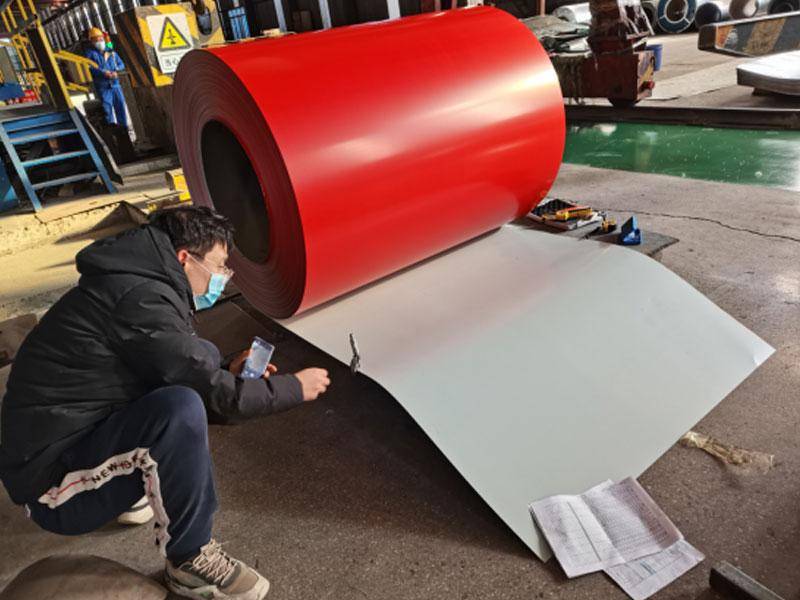
Our factory partners run continuous quality checks on each PPGL and PPGI coil before dispatch.
Formability and Surface Finish
PPGI has a slightly textured surface because zinc crystals form a visible spangle pattern on the substrate. PPGL has a finer, smoother surface because aluminum bonds more uniformly during the coating process.
For appliance panels, furniture fascias, or any application where paint adhesion and a clean finish matter, PPGL’s smoother base is an advantage.
For structural roofing sheets where surface texture is irrelevant, PPGI’s spangle pattern is not a problem at all.
Applications: Where Each Product Belongs
Where PPGI Is the Right Call
- Residential roofing and wall cladding
- Household appliances (refrigerator doors, washing machine panels)
- Furniture and shelving
- Indoor ceiling tiles and partitions
- Advertising signage and display boards
- Automotive interior panels
Where PPGL Makes More Sense
- Long-life industrial and commercial roofing
- Agricultural storage buildings, silos, and greenhouses
- Coastal and marine-adjacent construction
- Industrial ovens, drying equipment, and range hoods
- Oil and gas facility cladding
- Any project with a design life over 20 years in a corrosive environment
Pricing: What to Budget in 2026
Prices fluctuate with global hot-rolled coil benchmarks, coating costs, and freight. The table below gives a working reference for mill-direct pricing from Chinese suppliers in mid-2026.
| Product | Thickness Range | Estimated Price (USD/ton) |
| PPGI (standard polyester) | 0.3 mm – 0.8 mm | $720 – $820 |
| PPGI (high durability paint) | 0.3 mm – 0.8 mm | $800 – $900 |
| PPGL (standard polyester) | 0.3 mm – 0.8 mm | $760 – $870 |
| PPGL (PVDF / high-end paint) | 0.3 mm – 0.8 mm | $900 – $1,050 |
Need help sourcing steel from China? Our team helps international buyers compare steel mills, verify certifications, inspect factories, confirm technical specifications, and secure mill-direct pricing before payment. Share your project requirements today for quotation support and supplier evaluation.
WhatsApp Us for Free a Consultation
How to Choose Between PPGI and PPGL
Here is a simple decision framework our team uses when advising buyers:
Step 1 — Define your environment.
Is the installation inland, coastal, or industrial? Coastal and industrial = PPGL.
Step 2 — Check your service life requirement.
Under 10 years or a replaceable product? PPGI is fine. Over 15–20 years on a fixed structure? PPGL pays for itself.
Step 3 — Assess your fabrication process.
If you cut, punch, or roll-form heavily on site, PPGI’s cathodic protection at cut edges is a genuine advantage.
Step 4 — Set your budget ceiling.
PPGL costs 5–12% more than PPGI at equivalent specs. Run a lifecycle cost check, not just a purchase price comparison.
Step 5 — Confirm paint system compatibility.
Both products accept polyester and PVDF paint systems. For high-UV environments, specify a high-durability or PVDF paint regardless of substrate choice.
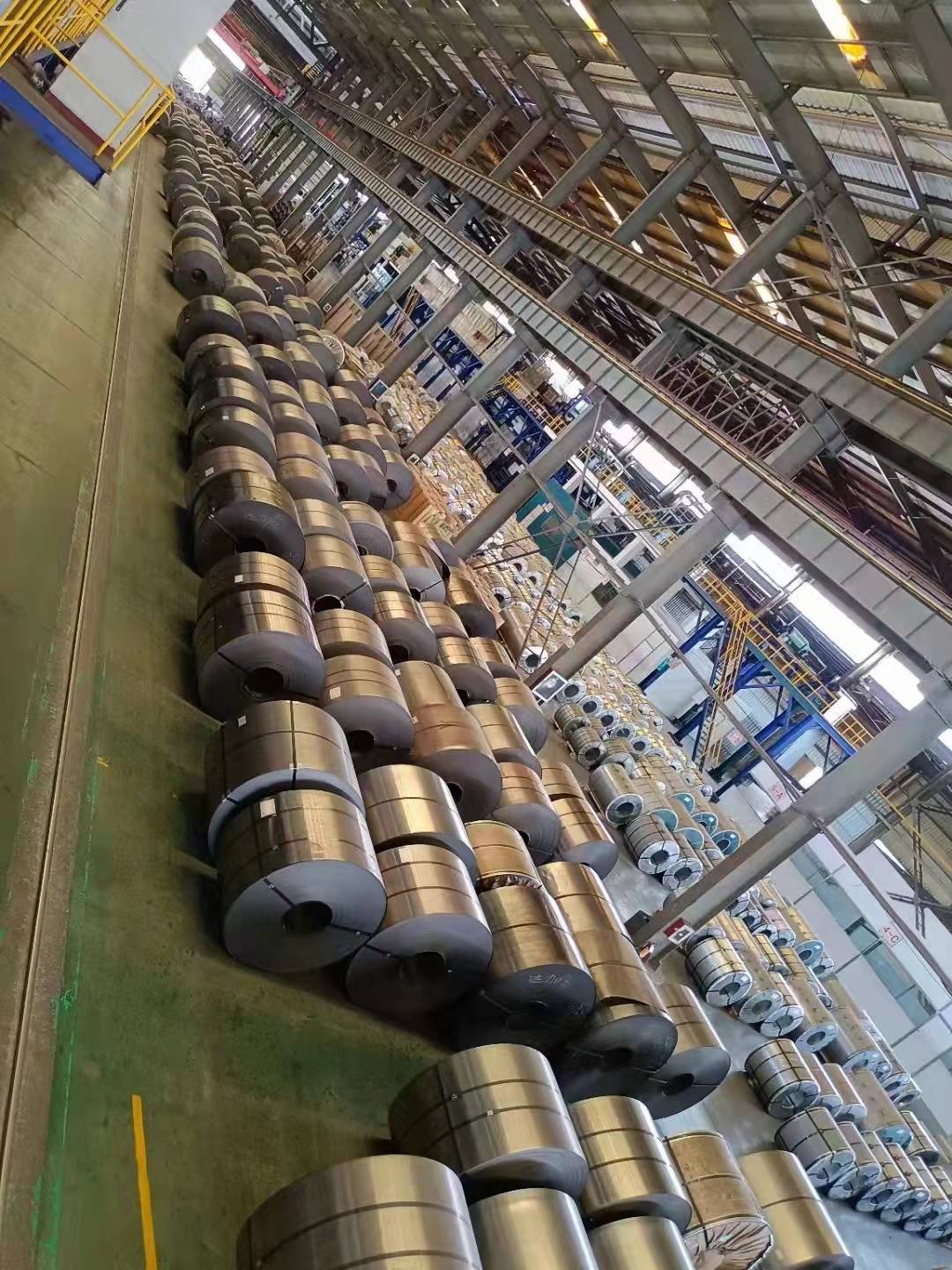
Every coil is strapped, moisture-wrapped, and labeled to protect coating integrity during ocean freight.
Packaging and Shipping
Wire rod and flat products like PPGI/PPGL coils need careful handling during export. Each coil is:
- Wrapped in moisture-barrier film to prevent condensation damage
- Secured with steel strapping at multiple points
- Eye-to-sky or eye-to-side loaded depending on vessel type
- Labeled with grade, heat number, and coating weight for customs clearance
Mill Test Certificates (MTC) confirming coating weight (g/m²), paint adhesion, and mechanical properties travel with every shipment. For added security, third-party inspectors such as SGS can verify product specs before loading.
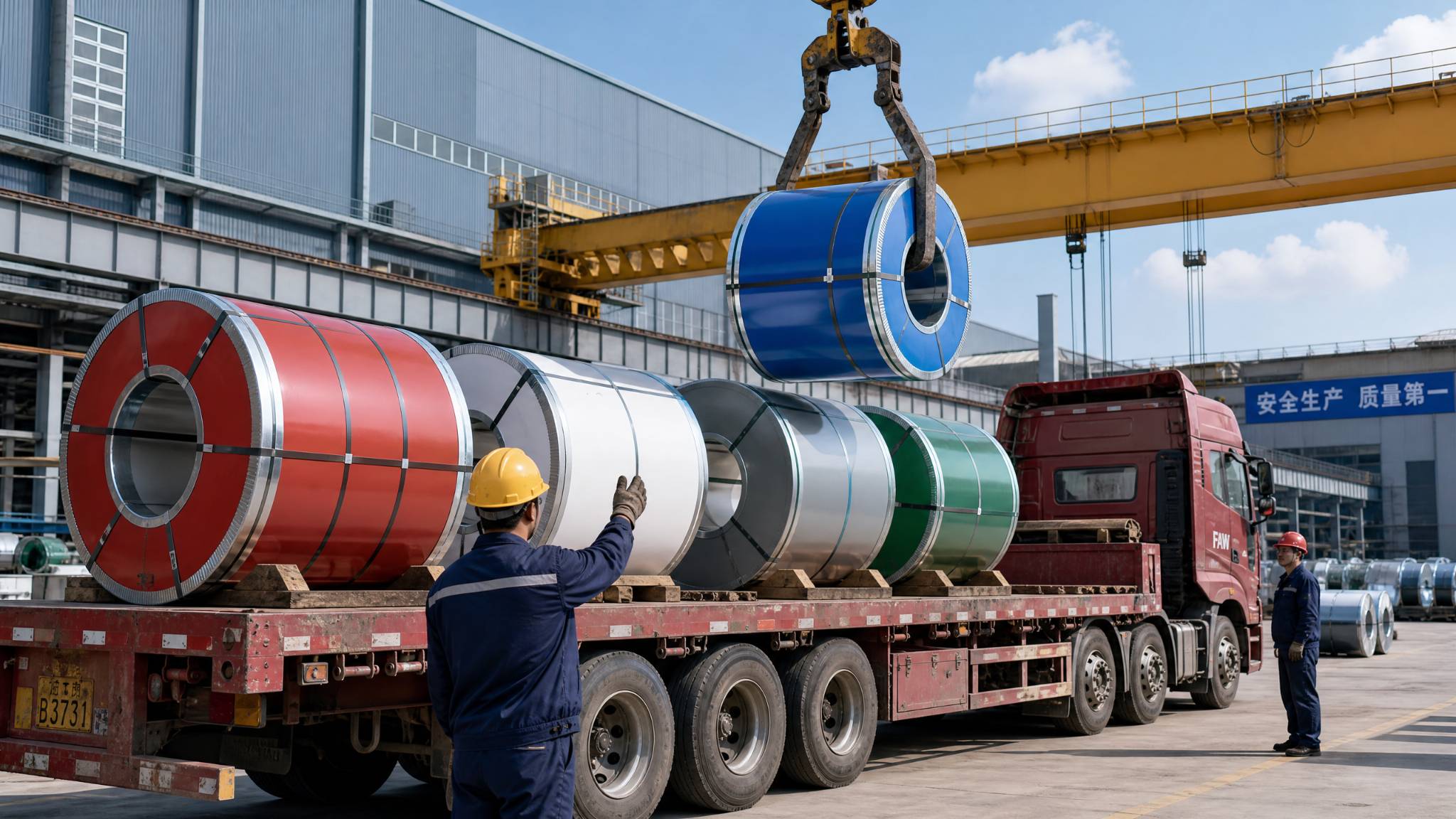
Efficient port handling ensures your PPGI or PPGL order ships on schedule and arrives intact.
People Also Ask: PPGI v. PPGL FAQ
What is the main difference between PPGI and PPGL?
The metallic coating under the paint. PPGI uses pure zinc. PPGL uses an alloy of approximately 55% aluminum, 43.4% zinc, and 1.6% silicon. That aluminum content makes PPGL more corrosion-resistant and heat-resistant, but it also means it costs slightly more.
Is PPGL stronger than PPGI?
Not necessarily in tensile strength — the base steel grade determines that. PPGL outperforms PPGI in corrosion resistance and heat resistance due to the aluminum-zinc alloy coating, not because the steel itself is harder.
Can PPGI and PPGL be painted the same colors?
Yes. Both products accept the same polyester and PVDF paint systems and can be produced in a wide range of RAL or custom colors. PPGL’s smoother surface can give a marginally finer paint finish.
Which product is better for coastal construction?
PPGL. The aluminum oxide barrier it forms resists salt air more effectively than zinc alone. For buildings within a few kilometers of the ocean, PPGL’s higher upfront cost is offset by longer service life.
Do I need a Mill Test Certificate for PPGI and PPGL imports?
Yes, always. The MTC confirms the coating weight in g/m², paint adhesion class, base metal grade, and chemical composition. Without it, you have no way to verify what you received matches what you ordered.
Camasteel’s Track Record with PPGI and PPGL
Our team has helped buyers across Africa, Southeast Asia, the Middle East, and Latin America source both PPGI and PPGL directly from verified Chinese mills. We handle supplier verification, spec confirmation, third-party inspection coordination, and documentation — so you are not navigating that alone.
Read how we have supported global steel buyers in our client success stories, or find out more about our team and sourcing model on the Camasteel about page.
We also hold ourselves to a high bar on supply chain conduct. Every mill we work with is evaluated against our responsible steel standards.
For a broader picture of the Chinese steel industry and how to identify the best mills, our best steel companies in China guide is the most detailed resource we have published.
Conclusion: PPGI or PPGL — Make the Right Call Before You Order
The PPGI v. PPGL decision is not complicated once you know what each product is designed for.
PPGI is cost-effective, widely available, and more than adequate for most residential construction, appliance, and indoor applications. PPGL costs a bit more but earns it back over time in corrosive, coastal, or high-heat environments.
The worst outcome is ordering the wrong product because a supplier did not explain the difference — or because the price alone drove the decision. Get the spec right first, then compare prices within the right product category.
Industrial Buyers: Importing Steel to China?
Are you navigating a serious steel purchase? We understand the complexities involved.
✅ Do you know your steel specifications?
✅ Are you buying in bulk?
✅ Do you need supplier verification in China?
✅ Do you need inspection before shipment?
✅ Do you need support shipping to China?
If you answered yes to these questions, you’re likely handling a significant steel procurement. Share Your Requirements with us today to streamline your import process.