Pre-painted Galvanized Iron (PPGI) Product: Your Ultimate Guide
In the dynamic world of modern construction and manufacturing, materials that offer both durability and aesthetic appeal are highly prized. That’s where Pre-painted Galvanized Iron (PPGI) steps in, revolutionizing how we approach building and design. This innovative material isn’t just steel; it’s a meticulously engineered solution designed to withstand the elements while providing a splash of color and style.
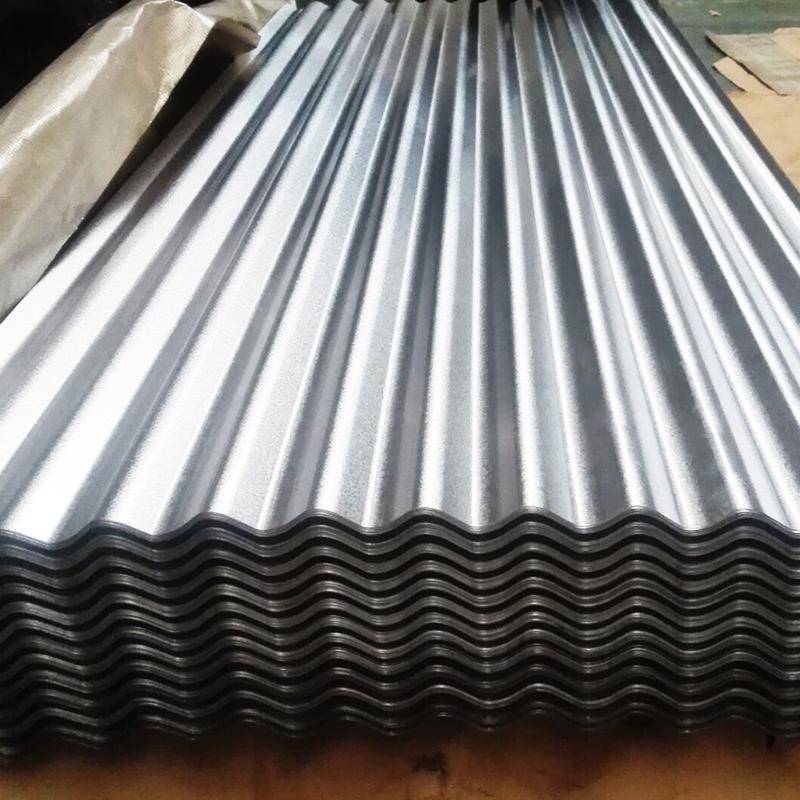
Our team of experts collaborates to integrate high-quality PPGI roofing into innovative architectural designs.
If you’re looking for materials that combine strength, longevity, and visual versatility, then understanding PPGI is absolutely essential. It represents a significant step forward in responsible steel production, offering sustainable and high-performance options for various industries.
What Exactly is Pre-painted Galvanized Iron (PPGI)?
At its core, PPGI is a type of color-coated sheet that uses hot-dip galvanized steel as its base substrate. But what does that really mean for you and your projects? Simply put, it’s steel that has been treated with a protective zinc coating and then, crucially, painted before it’s even shaped or formed. This pre-painting process isn’t just about adding color; it’s about creating a robust, multi-layered defense against corrosion and wear. Think of it as giving steel a superhero suit, ready to face harsh environments.
This material is widely recognized for its superior performance and adaptability. It’s a go-to choice for applications where both structural integrity and a pleasing appearance are non-negotiable. From towering skyscrapers to everyday household appliances, PPGI provides a reliable and attractive solution.
The Multi-Layered Protection of PPGI
Understanding the composition of PPGI helps appreciate its resilience. It’s not just paint on steel; it’s a sophisticated sandwich of protective layers, each playing a vital role in its overall performance. Let’s break down these layers:
- Cold-Rolled Steel Base: This is the foundation, providing the core strength and formability of the material.
- Zinc Coating: Applied through a hot-dip galvanization process, this layer offers excellent corrosion protection by sacrificially protecting the steel.
- Chemical Conversion Layer: This thin layer enhances adhesion between the zinc and the subsequent paint layers, improving overall durability.
- Primer Coating: A crucial layer that further boosts corrosion resistance and ensures strong bonding for the topcoat.
- Top Color Coating: This is the visible layer, providing vibrant color, gloss, and superior weather resistance. It’s available in a vast array of colors and finishes to meet any design requirement.
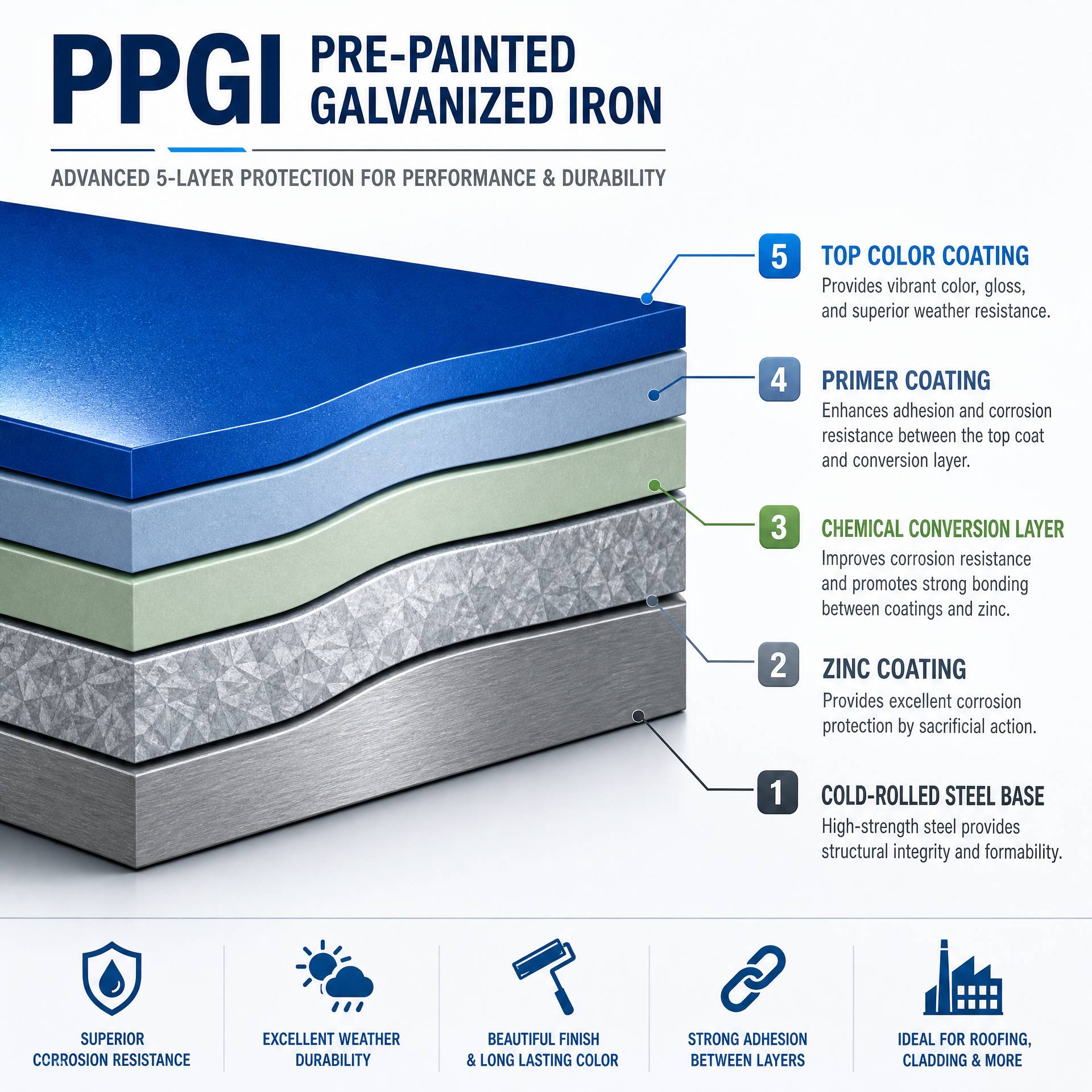
PPGI’s advanced multi-layer structure provides superior protection and long-lasting aesthetic appeal.
Why Choose PPGI? Unpacking the Benefits
When you’re making material choices for your next project, you’re not just picking a product; you’re investing in performance, longevity, and value. PPGI offers a compelling array of benefits that make it a standout choice in numerous industries. It’s a testament to how innovative material science can lead to success stories in various applications.
Superior Corrosion Resistance
One of the primary reasons for PPGI’s popularity is its exceptional resistance to corrosion. The combination of the zinc coating and multiple paint layers creates a formidable barrier against rust, moisture, and harsh chemicals. This means your structures and products will maintain their integrity and appearance for much longer, even in challenging environments.
Enhanced Aesthetic Appeal
PPGI isn’t just tough; it’s also beautiful. The pre-painting process allows for a uniform, high-quality finish in virtually any color imaginable. This opens up a world of design possibilities, enabling architects and manufacturers to create visually stunning projects without compromising on durability. The consistent finish also eliminates the need for post-installation painting, saving time and labor costs.
Durability and Longevity
Thanks to its robust construction, PPGI boasts an impressive lifespan. It resists chipping, cracking, and fading, ensuring that its protective and decorative qualities endure for decades. This long-term durability translates into lower maintenance costs and a higher return on investment for your projects.
Cost-Effectiveness
While the initial cost might seem comparable to other materials, the long-term savings with PPGI are significant. Reduced maintenance, extended lifespan, and the elimination of on-site painting contribute to a lower total cost of ownership. This makes PPGI a smart economic choice for both large-scale industrial applications and smaller commercial projects.
Versatility in Application
PPGI’s unique properties make it incredibly versatile. It can be easily cut, bent, and formed into various shapes without damaging its protective coatings. This flexibility allows it to be used in a wide range of applications, from roofing and wall cladding to household appliances and automotive parts.
PPGI in Action: Key Applications Across Industries
PPGI’s blend of strength, beauty, and durability makes it an indispensable material across a multitude of sectors. Its adaptability allows it to meet diverse functional and aesthetic demands.
Construction and Building Materials
This is perhaps the most prominent application for PPGI. Its weather resistance and aesthetic versatility make it ideal for:
- Roofing and Wall Cladding: Providing durable, colorful, and low-maintenance exteriors for industrial buildings, commercial complexes, and residential homes.
- Architectural Panels: Creating modern and attractive facades that stand the test of time.
- Interior Decoration: Used for ceilings, partitions, and decorative elements due to its clean finish and wide color range.
Home Appliances
Walk into any modern kitchen, and you’ll likely find PPGI. It’s extensively used in the manufacturing of:
- Refrigerators and Freezers: The outer panels benefit from PPGI’s corrosion resistance and sleek finish.
- Washing Machines and Dryers: Providing durable and aesthetically pleasing casings.
- Microwave Ovens and Water Heaters: Ensuring longevity and a consistent look.
Transportation Industry
PPGI’s lightweight yet strong nature, combined with its corrosion resistance, makes it suitable for certain components in:
- Automotive Parts: Used in non-structural elements where protection and appearance are key.
- Railway Carriages: Contributing to the durability and aesthetic of interior and exterior panels.
Other Industrial Uses
Beyond these major sectors, PPGI finds its way into:
- Electrical Cabinets: Protecting sensitive electrical components from environmental factors.
- Furniture: Offering durable and stylish surfaces for office and home furniture.
- Signage: Providing a long-lasting and vibrant base for outdoor and indoor signs.
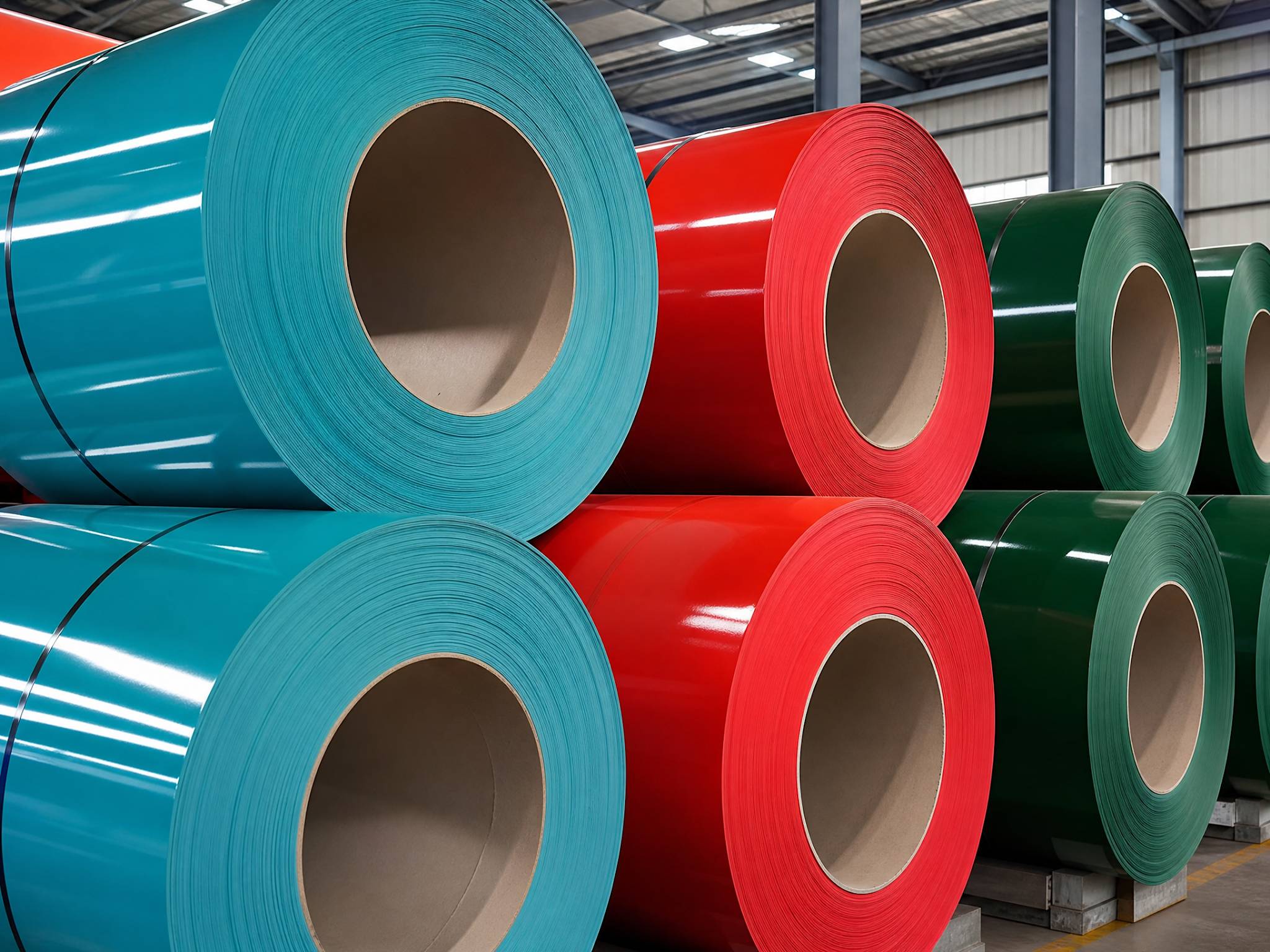
High-quality PPGI steel coils, available in a spectrum of vibrant colors, ready for diverse industrial applications.
The PPGI Manufacturing Process: A Closer Look
The creation of PPGI is a sophisticated process that combines advanced metallurgy with precision coating technology. It’s a journey that transforms raw steel into a highly durable and aesthetically pleasing product. Our factory partners, like those we work with at Camasteel, utilize state-of-the-art continuous coating lines to ensure consistent quality.
From Coil to Coated Masterpiece
- Uncoiling and Pre-treatment: The process begins with large coils of galvanized steel. These coils are uncoiled and then undergo a thorough cleaning and chemical pre-treatment to ensure optimal adhesion for the subsequent coatings.
- Primer Application: A primer coat is applied to both sides of the steel strip. This layer is crucial for enhancing corrosion resistance and providing a smooth base for the topcoat.
- Curing: The primed strip then passes through a curing oven, where the primer is baked onto the steel, creating a strong bond.
- Topcoat Application: The final color coating, or topcoat, is applied. This layer provides the desired color, gloss, and additional protection against UV radiation and weathering.
- Final Curing and Coiling: After the topcoat is applied, the strip goes through another curing oven. Once cooled, the finished PPGI material is recoiled, ready for shipment and further processing.
This continuous and highly automated process ensures uniformity in coating thickness and color, leading to a consistently high-quality product.
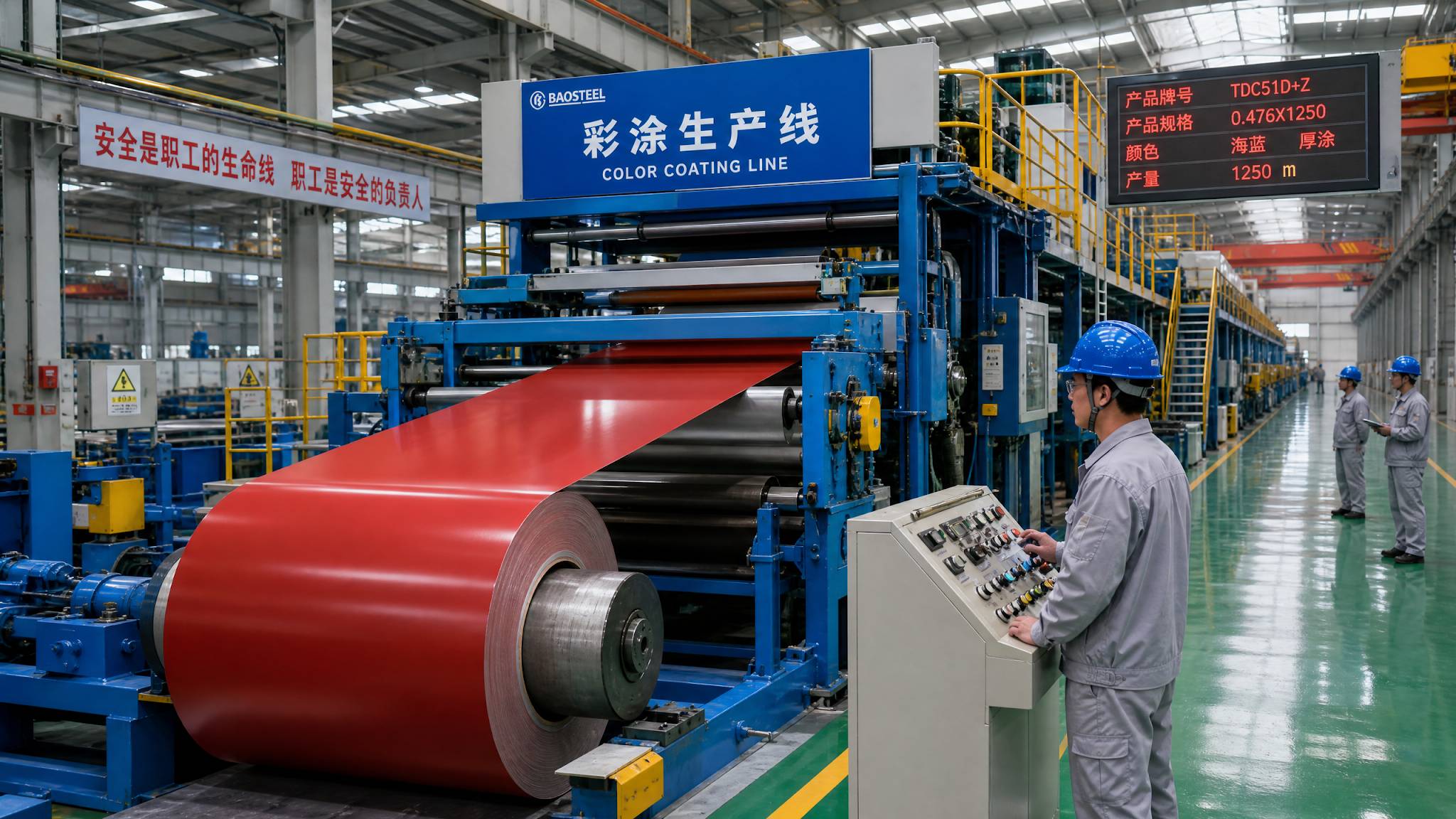
Our factory partners utilize advanced continuous coating technology to produce high-quality PPGI with uniform color and finish.
Technical Specifications and Quality Standards
When sourcing PPGI, understanding the technical specifications and adhering to international quality standards is paramount. This ensures you receive a product that not only meets your project’s requirements but also guarantees long-term performance and reliability.
Key Specifications to Consider
- Thickness: Typically ranges from 0.20 mm to 1.20 mm, depending on the application.
- Width: Standard widths are common, but custom specifications are often available.
- Zinc Coating Mass: Measured in g/m², this indicates the amount of zinc protection. Higher values generally mean better corrosion resistance.
- Paint System: Refers to the type of paint used (e.g., Polyester, PVDF, SMP) and its thickness, which impacts durability, UV resistance, and color retention.
- Color: Specified using RAL codes or custom color matching.
International Quality Standards
Reputable PPGI products adhere to stringent international standards, ensuring their quality and performance. Some common standards include:
- ASTM A755/A755M: Standard Specification for Steel Sheet, Metallic Coated by the Hot-Dip Process and Prepainted by the Coil-Coating Process for Exterior Exposed Building Products.
- EN 10169: Continuously organic coated (coil coated) steel flat products.
- JIS G 3312: Pre-coated galvanized steel sheets and coils.
These standards guarantee that the PPGI you procure has undergone rigorous testing and meets specific performance criteria. Always insist on proper documentation, such as Mill Test Certificates (MTCs), to verify compliance.
| Specification Feature | Description | Importance |
| Base Material | Hot-dip galvanized steel | Provides foundational strength and primary corrosion protection |
| Coating Type | Polyester (PE), Silicon Modified Polyester (SMP), Polyvinylidene Fluoride (PVDF) | Determines UV resistance, gloss retention, and flexibility |
| Thickness Range | 0.20mm – 1.20mm | Influences structural integrity and application suitability |
| Zinc Coating Mass | Z60 to Z275 (g/m²) | Directly impacts corrosion resistance and lifespan |
| Color Options | RAL color chart, custom colors | Aesthetic versatility and design flexibility |
Need help sourcing steel from China? Our team helps international buyers compare steel mills, verify certifications, inspect factories, confirm technical specifications, and secure mill-direct pricing before payment. Share your project requirements today for quotation support and supplier evaluation.
WhatsApp Us for Free a Consultation
How to Procure High-Quality PPGI: A Buyer’s Guide
Acquiring PPGI, especially in bulk, demands a clear understanding of the market and a commitment to quality assurance. In today’s global market, the procurement process has become more streamlined, yet a professional approach remains key to avoiding common pitfalls. Whether you’re a large-scale manufacturer or a specialized construction firm, a structured procurement strategy is vital for your project’s success.
Your Procurement Journey for PPGI
- Define Your Needs: Clearly outline the required thickness, width, zinc coating mass, paint system, and color for your specific application. Precision here prevents costly errors later.
- Select a Verified Supplier: Partner with suppliers who have a proven track record of quality and reliability in the international market. Look for those with strong manufacturing capabilities and adherence to international standards.
- Request a Detailed Quote: Ensure the quote comprehensively covers product specifications, pricing, lead times, and all relevant shipping terms (Incoterms).
- Insist on Quality Documentation: Always demand a Mill Test Certificate (MTC) and consider engaging third-party inspection services (like SGS or BV) for independent verification before shipment. This is a critical step in ensuring the product meets your exact requirements.
- Coordinate Logistics: Work with experienced logistics partners to manage the efficient and secure shipping and delivery of your PPGI to its final destination. Proper handling is crucial to prevent damage.
Packaging and Shipping: Ensuring Safe Delivery
Once your PPGI coils are produced, ensuring their safe arrival at your facility is the final, crucial step. Proper packaging and efficient logistics are essential to protect the material from damage during transit, preserving its quality and appearance.
Robust Packaging for Global Export
PPGI coils are typically prepared for export with multi-layered packaging designed to withstand the rigors of international shipping:
- Inner Protection: Coils are often wrapped in waterproof kraft paper or plastic film to protect against moisture and dust.
- Outer Protection: Galvanized steel sheets or bands are used as outer protection to prevent physical damage during handling.
- Strapping: Heavy-duty steel straps secure the coil, preventing unwinding or movement during transit.
- Pallets/Skids: Coils are placed on wooden or steel pallets for easier handling by forklifts and cranes.
This meticulous packaging ensures that the PPGI arrives in pristine condition, ready for immediate use in your projects.
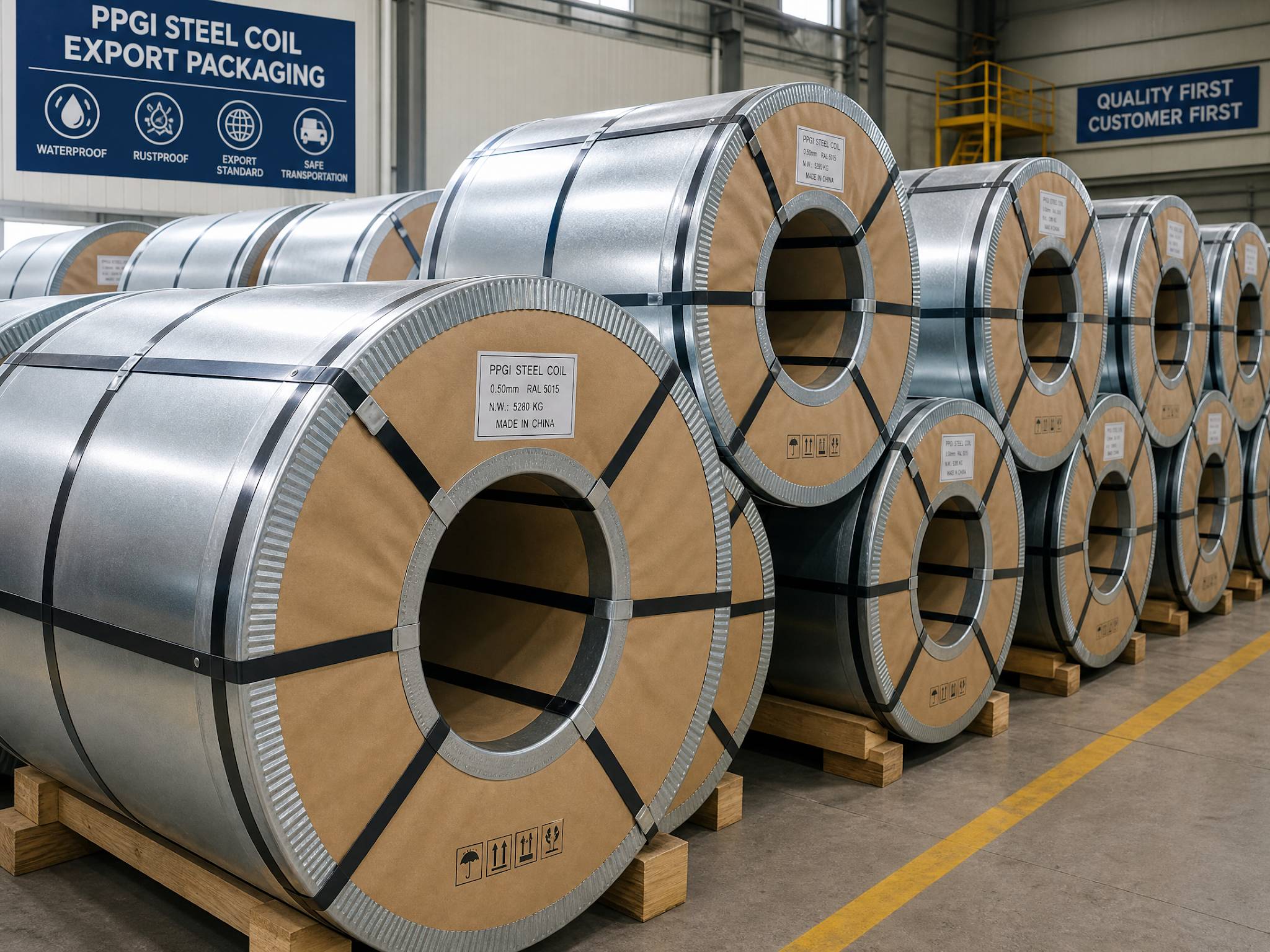
Our meticulous packaging ensures that every PPGI coil is protected for safe and efficient global transport.
Efficient Logistics and Port Handling
Shipping large quantities of PPGI requires a sophisticated logistics operation. Most international shipments are handled as break-bulk cargo or in containers on large ocean-going vessels. This involves careful coordination with port authorities and stevedores to ensure the coils are loaded and secured correctly. Our team’s deep experience in international trade means you can source your PPGI with confidence, knowing your shipment will be handled professionally from the mill to your doorstep.
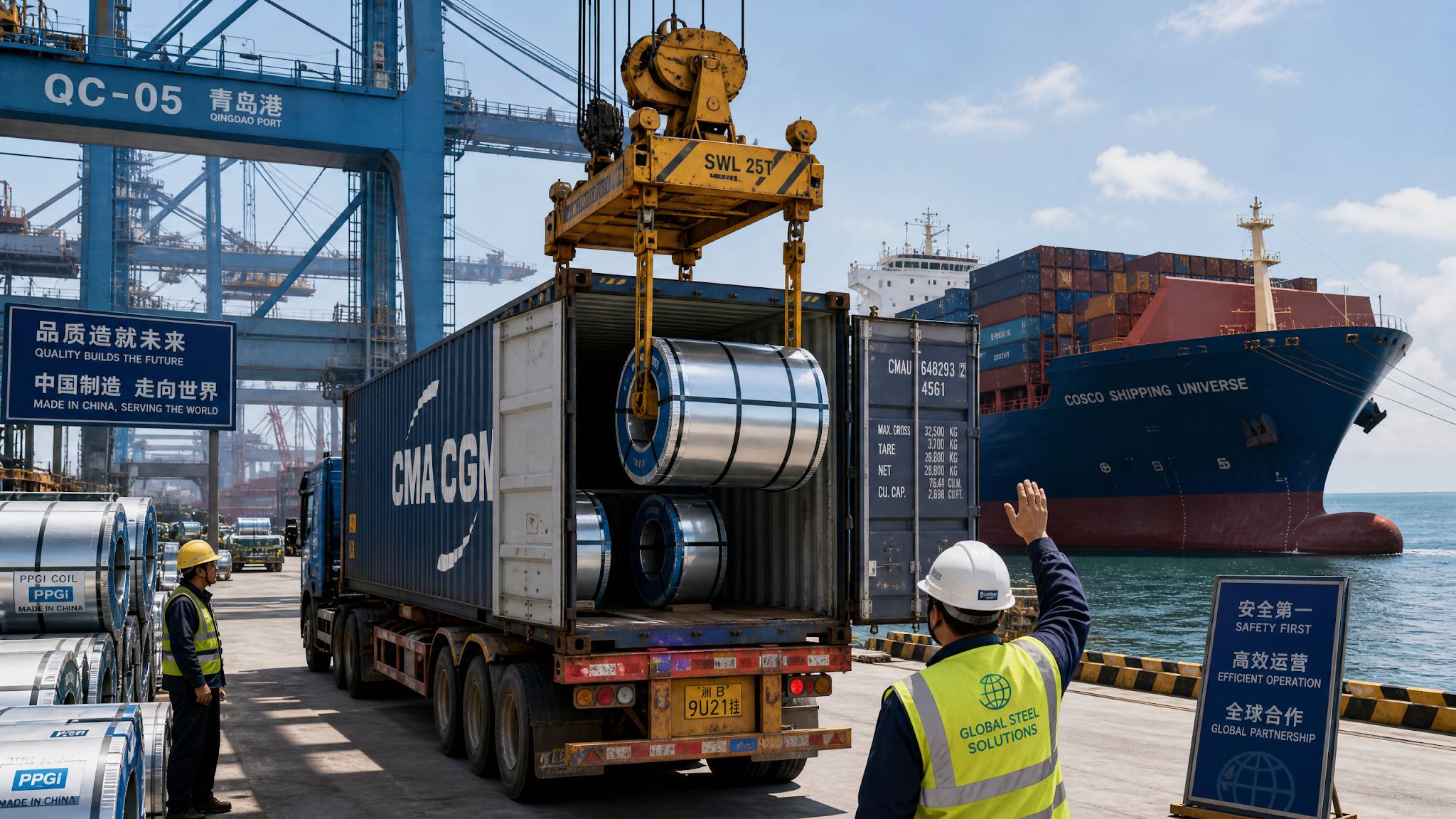
Efficient logistics and expert port handling ensure the timely and secure delivery of PPGI to global destinations.
People Also Ask: Your PPGI Questions Answered
We understand you might have more questions about PPGI. Here are some common inquiries we receive:
What is the main difference between PPGI and PPGL?
The primary difference lies in the base metal. PPGI uses hot-dip galvanized steel (zinc coating) as its substrate, while PPGL (Pre-painted Galvalume Iron) uses galvalume steel (an alloy of zinc, aluminum, and silicon) as its substrate. PPGL generally offers superior corrosion resistance in certain environments due to the aluminum content, while PPGI is often more cost-effective and widely used.
Can PPGI be used for outdoor applications?
Absolutely! PPGI is specifically designed for outdoor use. Its multi-layered coating system, particularly the top color coat, provides excellent resistance to UV radiation, weathering, and corrosion, making it ideal for roofing, wall cladding, and other exterior building components.
How long does PPGI typically last?
The lifespan of PPGI can vary depending on the quality of the product, the specific paint system used, and the environmental conditions it’s exposed to. However, high-quality PPGI, when properly installed and maintained, can last for 20 to 50 years or even longer, offering exceptional durability and value.
Is PPGI environmentally friendly?
Yes, PPGI can be considered an environmentally friendly material. Steel itself is 100% recyclable, and the long lifespan of PPGI reduces the need for frequent replacement, minimizing waste. Furthermore, modern manufacturing processes for PPGI are increasingly focused on reducing energy consumption and waste generation, aligning with sustainable practices.
Conclusion: Secure Your Supply of High-Quality PPGI
Securing a reliable supply of high-quality Pre-painted Galvanized Iron is a fundamental requirement for any successful construction project or manufacturing operation. By understanding its technical specifications, the meticulous manufacturing process, and the best practices for procurement, you can ensure your business has the premium material it needs to thrive. The global steel market offers incredible opportunities for those who navigate it with professional expertise.
At Camasteel, we are dedicated to helping our clients succeed by providing the best PPGI products and procurement support in the industry. Our team is ready to help you find the perfect PPGI for your specific needs. Contact us today to discuss your requirements and get a free, no-obligation quote for your next order.
Industrial Buyers: Planning to Buy Steel from China?
✅ Do you know your steel specifications?
✅ Are you buying large quantities of steel?
✅ Do you need support to check if your supplier is a real steel mill (not trader)?
✅ Do you need factory verification before you pay a large deposit?
✅ Do you need pre-shipment inspection to make sure the steel grade is correct?
If yes, you may be handling a serious steel purchase. [Share Your Requirements]