
PPGI vs PPGL
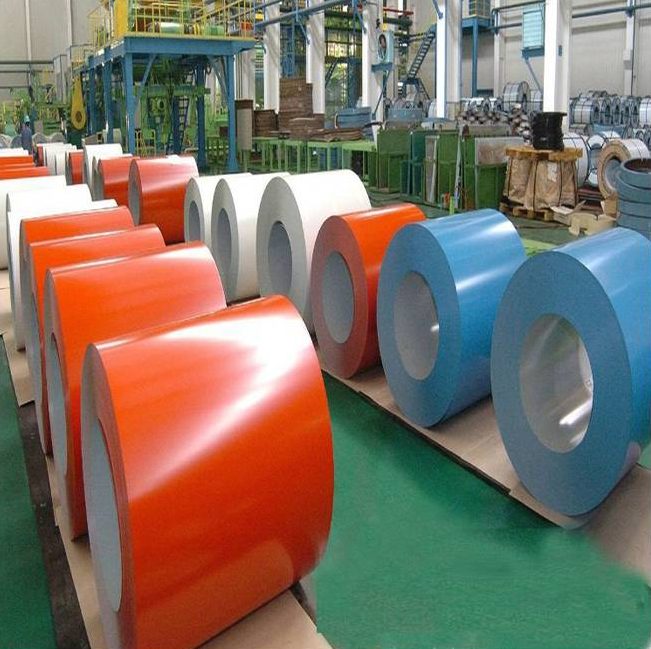
When you are buying pre-painted steel for roofing, appliances, or cladding, two products come up every single time — PPGI v. PPGL. They look similar in the catalogue. They are both color-coated. They are both sold in coils. But they are not the same product, and picking the wrong one can cost you in durability, rework, or budget overrun. Choosing between PPGI and PPGL starts with knowing what each coating is designed to do. At Camasteel, we work with responsible steel sourcing practices and help international buyers make technically sound decisions before they place an order. This guide breaks down exactly what PPGI and PPGL are, where they differ, which applications suit each product, and how to choose between them in 2026. What Are PPGI and PPGL? A Quick Definition Both products start life as flat-rolled steel coil. The difference is in the metallic coating that sits between the steel substrate and the colored paint layer. PPGI — Pre-Painted Galvanized Iron The substrate is galvanized steel, which means it carries a layer of pure zinc. That zinc layer acts as a sacrificial barrier — it corrodes before the base steel does, protecting the structural integrity of the sheet. PPGL — Pre-Painted Galvalume Steel The substrate here is galvalume steel, coated with an alloy of approximately 55% aluminum, 43.4% zinc, and 1.6% silicon. That aluminum content is the key difference. It gives the sheet a much denser, more stable barrier against both corrosion and heat. Both products then receive a primer coat and a top coat of polyester, PVDF, or another paint system before being shipped as finished coils. The metallic coating layer is the critical difference between PPGI and PPGL performance. PPGI v. PPGL: Key Differences at a Glance Property PPGI PPGL Metallic Coating Pure Zinc (GI base) 55% Al / 43.4% Zn / 1.6% Si Corrosion Resistance Good Superior (Al-Zn barrier is denser) Heat Resistance Up to ~230°C Up to ~315°C Surface Finish Slightly rougher Smoother (Al improves adhesion) Weight (same thickness) Heavier per m² Slightly lighter (Al is less dense than Zn) Cut-Edge Protection Better (Zn self-heals cut edges) Weaker at cut edges Price Difference Baseline Typically 5–12% higher than PPGI Color Range Very wide Wide (slightly fewer specialty tones) Common Standard EN 10346, ASTM A653 EN 10346, ASTM A792 The Coating Chemistry — Why It Matters Most buyers focus on the paint color. The coating underneath the paint is what actually determines how long the sheet lasts in the field. Zinc in PPGI is electrochemically active. When the sheet is scratched or cut, the zinc migrates toward the exposed steel and forms a protective layer. This is called cathodic protection, and it is why PPGI handles cut edges and site damage well. Aluminum in PPGL forms a tight, stable oxide layer on the surface. That layer resists oxidation and blocks heat transfer far more effectively than zinc alone. The trade-off is that aluminum does not self-heal at cut edges the way zinc does. If you are roll-forming or cutting PPGL heavily on site, you need to account for that. Corrosion Resistance: Where PPGL Pulls Ahead In standard salt-spray testing, PPGL typically shows a meaningfully longer service life than PPGI of the same thickness and paint system. The dense aluminum-zinc alloy layer slows the rate at which moisture reaches the base steel. This makes PPGL the preferred choice for: Coastal environments where salt air is constant Industrial zones with elevated chemical exposure Agricultural buildings exposed to fertilizer fumes and humidity Long-span roofing where replacement is expensive PPGI is not a weak product in corrosion terms. For inland construction, standard residential roofing, and appliance skins, it performs reliably and costs less. Heat Resistance: A Critical Factor for Specific Uses If your application involves sustained heat — industrial ovens, roofing in extreme-sun climates, or proximity to heat-generating equipment — PPGL handles elevated temperatures more stably. PPGI can soften or discolor at temperatures above roughly 230°C. PPGL maintains its coating integrity to around 315°C. For most roofing and wall cladding applications this does not come into play. For industrial and agricultural dryer equipment, it is a deciding factor. Our factory partners run continuous quality checks on each PPGL and PPGI coil before dispatch. Formability and Surface Finish PPGI has a slightly textured surface because zinc crystals form a visible spangle pattern on the substrate. PPGL has a finer, smoother surface because aluminum bonds more uniformly during the coating process. For appliance panels, furniture fascias, or any application where paint adhesion and a clean finish matter, PPGL’s smoother base is an advantage. For structural roofing sheets where surface texture is irrelevant, PPGI’s spangle pattern is not a problem at all. Applications: Where Each Product Belongs Where PPGI Is the Right Call Residential roofing and wall cladding Household appliances (refrigerator doors, washing machine panels) Furniture and shelving Indoor ceiling tiles and partitions Advertising signage and display boards Automotive interior panels Where PPGL Makes More Sense Long-life industrial and commercial roofing Agricultural storage buildings, silos, and greenhouses Coastal and marine-adjacent construction Industrial ovens, drying equipment, and range hoods Oil and gas facility cladding Any project with a design life over 20 years in a corrosive environment Pricing: What to Budget in 2026 Prices fluctuate with global hot-rolled coil benchmarks, coating costs, and freight. The table below gives a working reference for mill-direct pricing from Chinese suppliers in mid-2026. Product Thickness Range Estimated Price (USD/ton) PPGI (standard polyester) 0.3 mm – 0.8 mm $720 – $820 PPGI (high durability paint) 0.3 mm – 0.8 mm $800 – $900 PPGL (standard polyester) 0.3 mm – 0.8 mm $760 – $870 PPGL (PVDF / high-end paint) 0.3 mm – 0.8 mm $900 – $1,050 Need help sourcing steel from China? Our team helps international buyers compare steel mills, verify certifications, inspect factories, confirm technical specifications, and secure mill-direct pricing before payment. Share your project requirements today for quotation support and supplier evaluation. WhatsApp Us for Free a Consultation How to Choose Between PPGI and PPGL Here
What is Pre-Painted Galvanized Iron (PPGI)?
What is Pre-Painted Galvanized Iron or PPGI Pre-Painted Galvanized Iron is an industrial and civil construction steel product with multiple uses. Pre-Painted Galvanized Iron is also known as PPGI. PPGI is sometimes referred to as pre-coated steel. Pre-Painted Galvanized Iron is often used in making a wide range of products from machines to device manufacturing. This is one form of Galvanized Iron (GI) that is submerged in zinc. This helps prevent rust from forming in the product. In the industry, they are often referred to as metallic coated steels or pre-coated steels as well. What is Pre-Painted Galvanized Iron Used for? There are various forms of Pre-Painted Galvanized Iron, and the usage of the steel depends on the form. Manufacturers use Pre-Painted Galvanized Iron worldwide for the following needs: Construction industry – when your clients are looking for durable but classy and elegant-looking materials, Pre-Painted Galvanized Iron should be at the top of your list. The number one characteristic of PPGI is its ability to withstand corrosion over a long period of time. On top of being used for substantial structural pieces in construction, PPGI can also be considered for smaller needs. It can be for gutters, poles, fencing, and even tubings. Wind and Solar Energy Industry – Clean energy is fast becoming the go-to source for energy needs. For manufacturers in this industry, PPGI can be a great material for its ability to withstand extreme weather conditions. The corrosion protection puts your mind at ease knowing your customers are getting quality products that require minimal maintenance on their part. As they leave their items out in the open for extended periods of time, they are assured that the materials are of the highest quality. Car industry – Pre-Painted Galvanized Iron or PPGI can also be used in the automotive industry. It can provide vehicles a body that can withstand extreme weather conditions. This gives carmakers the ability as well to market the units as “rust-resistant” given the zinc coating the material has. PPGI can also be ordered in bulk in different colors which is a huge cost-savings for car brands as well. The most popular uses of this product are in the construction industry and they are often used in commercial and residential industries. What are the benefits of Pre-Painted Galvanized Iron? More than what has been discussed earlier, Pre-Painted Galvanized Iron or PPGI still has numerous benefits for your business: Worry-free maintenance – Pre-Painted Galvanized Iron gives your clients peace of mind in knowing they are using quality products in their building sites. As a result, your business name is associated with delivering trusted products they can depend on. Cost savings – When you purchase PPGI in bulk, they are delivered to you in your desired length and even color. When your clients bring them to their building or construction sites, they are ready to be used. This helps them save on time and money in painting and preparation of the product. Rust-resistant – Rust is the number one culprit in the degradation of steel but Pre-Painted Galvanized Iron has a zinc coating that can help it withstand rust over a long period of time. High-corrosion resistance is one of the premier characteristics of PPGI. This also makes the materials fire-resistant giving your customers peace of mind. Flexibility – PPGI can be used from cladding sheets, verandas, and even corrugated roofing. Pre-Painted Galvanized Iron comes in a variety of colors for you to choose from. On top of these, they are also processed not only in your desired paint color but length as well. How do you manufacture Pre-Painted Galvanized Iron? In factories, Pre-Painted Galvanized Iron is made through a series of steps in a continuous galvanizing line or sometimes referred to as CGL. Pre-cleaning consists of several stages from degreasing the item to washing and coating and primer. This is where it is hot-dipped into molten zinc which provides the PPGi is rust-resistance characteristic. It forms a barrier between the stell and the elements outside keeping the product intact for extended periods of time. After this, it is then cooled down before it is cut down to specific client measurements. It is coiled after for easier transport. Which Countries Manufacture Pre-Painted Galvanized Iron in Bulk? The main producers of Pre-Painted Galvanized Iron or PPGI are: China Europe Korea Japan Consumption of Pre-Painted Galvanized Iron has increased dramatically across the world, especially in developing countries. The demand is because PPGI is a ready-to-use construction material that can last for extended periods. How do you transport Pre-Painted Galvanized Iron? Pre-Painted Galvanized Iron is typically exported by sea but can be transported in bundles by truck to job sites. A thorough checking process occurs before the steel is ready for export. This is part of a stringent quality assurance process that ensures that the correct product is shipped out to its intended recipients. Forklifts do all the heavy lifting from loading to unloading. The items are all secured during transport making sure it reaches you safe and sound and have the following dimensions: Width – 600 1250 mm Thickness – 0.12mm – 2.0mm Material: SPCC. SGCC. DX51D. SGCH. ASTM A653. ASTM A792 Grade SGCC. SGLCC. CGCC. SPCC. STO1Z. DX51D. A653 Where to Buy Pre-Painted Galvanized Iron? You might find Pre-Painted Galvanized Iron in small quantities near you. However, it is better to import and buy directly from manufacturers if you need huge quantities of PPGI. More than the certification and paperwork that comes with the shipment, you also get to save a lot on cost. If you require bulk quantities of this steel, you can buy Pre-Painted Galvanized Iron on our website. Here at Camasteel we have Pre-Painted Galvanized Iron for sale. We export worldwide, so you can contact us for a FREE quotation today via email [email protected] or send a message on WhatsApp for a fast response +86-131-2037-9271.
A Definitive Buying Steel Guide: An Overview of the Global Steel Industry & How to Buy Steel
China has become the largest steel and iron producers in the world. They have created more capacity in order to keep up with the rising demand for steel. Steel has become very popular and essential in many industries today. China not only produces steel for their country use, but is the largest exporter of steel to many other countries around the world. China’s share in steel production continues to rise each year, as well. Table of Contents A Definitive Buying Steel Guide: An Overview of the Global Steel Industry & How to Buy Steel What is Steel? Typical steel specifications Advantages of Steel Steel Industry Countries that Have Steel How important is the steel industry? What is steel used for? What industries use the most steel? Which are the largest steel companies? How is Steel Made Steel mill Is Steel Environmentally friendly? Overview of Steel Products Raw steel vs finished products of steel Popular steel products Steel Prices Price of steel Global Steel Market Trading of Steel Steel regulation Regulations on buying steel Safety regulations in the steel industry China Steel Industry How much steel is imported from China? What factors caused China to expand the industrial production of iron and steel? Quality of Chinese steel How to Buy Steel from China China steel production Buy in bulk from China Steel Transport: Importing from China Top importers The main exporters of steel are Conclusion What is Steel? Steel is made from iron ore. Iron ores are rock and minerals from which metallic iron can be extracted. Steel was first discovered and produced in India by using a method that bonds the right amount of carbon and iron. Typical steel specifications Specifications include steel properties such as hardness, toughness, tensile strength, yield strength, corrosion, and more. Specific heat of steel – the specific heat capacity of steel is 420 J/(kg C). This can be important in the production of steel. Specific weight of steel – the specific weight of steel is about 7.8 – 7.9 kg/dm3. It is important to know the weight of the steel product being purchased. This can ensure safety and support of the steel product in its structure. Specific gravity of steel – Steel has a specific gravity of 7850 kg/dm3. Strength of steel – Tensile strength refers to measurement of force required to break the material. Yield strength refers to the measurement of force required to start bending or deforming the material. Advantages of Steel Speed of Construction Cost Savings Attractive Design High Strength and Durability Sustainable Effective and Reliable Modifiable Steel Industry The steel industry is continuously growing worldwide. Steel has become a staple for many projects in almost every country. Countries that Have Steel Steel is used often for various reasons in different industries, therefore there are many countries around the world who produce steel. There are still countries, though, that may not have the capacity or a large enough capacity to produce their own steel or produce enough. Therefore, importing large quantities of steel is done frequently among those countries. How important is the steel industry? Steel production is becoming more important as more industries are using steel in various projects because of the benefits. What is steel used for? Since there are many advantages to using steel, it is a popular material to use for Buildings Houses Tools Automobiles Trains Ships Machines Appliances Weapons What industries use the most steel? Steel used worldwide is distributed to different sectors: Sector % of steel used worldwide Building and Infrastructure 52% Mechanical equipment 16% Automotive 12% Metal products 10% Other transport 5% Electrical equipment 3% Domestic appliances 2% Which are the largest steel companies? Top 10 largest global steel companies are: ArcelorMittal (Luxembourg) – produced 96.5 million tons of steel produced in 2020. They are the leading company in steel and mining. China Baowu Group (China) -produced 67.5 million tons in 2020. This company is the second largest and focuses efforts on environmentally friendly production. Nippon Steel Corporation (Japan) – produced 49.3 million tons. This company is headed in Japan, but has company bases around the world, providing steel for both large and small projects. HBIS Group (China) – produced 46.9 million tons. This group has become China’s largest steel supplier for home appliances, and bridges and construction. In addition, they are China’s second largest supplier for automotive. Posco (South Korea) – produced 42.9 million tons. This is the first integrated steel mill in Korea. Shagang Group (China) – produced 40.7 million tons. They make sure they are using advanced technologies and equipment to be most efficient. Ansteel Group (China) – produced 37.4 million tons. They focus on adjustment, reform, innovation, and strength of their steel. They strive for using the best materials and “creating better life”. JFE Steel Corporation (Japan) – produced 29.2 million tons. Their vision is to “[contribute] to society with the world’s most innovative technology”. They also value creating relationships with their clients. Jianlong Group (China) – produced 27.9 million tons. This company is a privately owned steel manufacturing company. Shougang Group (China) – produced 27.4 million tons. This is a Chinese state-owned steel company. It is one of the oldest steel manufacturing companies in China. They do more than work with steel, such as city infrastructure, conduct minerals, real estate, and finance. How is Steel Made Steel is typically made by either using a blast furnace or an electric arc furnace. The blast furnace uses coal, ground up into a powder. The coal is cooked and turned into “coke”. The coke is then used to melt the iron ore. The electric arc furnace is a newer process. This way uses an electrical current to melt scrap steel and produce molten steel. Steel mill Steel mills are an industrial plant for the purpose of manufacturing steel. There are various types of steel mills such as Integrated steel mill Specialty steel mill Iron ore steel mill
How to Buy Rebar
What is a rebar? Rebar, which stands for reinforcing bar, is also known to the general public as reinforcing steel. Rebar is typically what you will mostly see on establishments and buildings which as being constructed. These are steel-type rods which are used to generally reinforce the foundations of a structure. It is found in any construction which uses concrete as its base foundations since rebar strengthens it. Rebar acts as the bonding agent that helps keep the concrete foundations from crumbling under large stresses and loads. How is rebar manufactured? The production process of rebar is very simple and requires extreme heat. To make these, steel is heated down until melted and then pushed into circular openings of a certain diameter. One of the distinguishing factors of rebar is that it has a “rib” design. This adds to the bonding strength of the concrete and prevents it from slipping out of place. What materials are used in the manufacture of rebar? Carbon steel is commonly the material used when making rebar. Although, there are also rebar made from stainless steel, carbon fiber, glass fiber, or sometime basalt fiber. Since rebar is a type of unfinished steel, it has the tendency to corrode and rust. Because of this some manufacturers of rebar coat them with epoxy or stainless steel. What are the common types of rebar for sale? Epoxy coated Rebar – This type is expensive and is usually used within foundations that are submerged in water, particularly saltwater. The epoxy coating protects it from any corrosion or rusting. Carbon Steel Rebar – This is considered the cheapest and affordable type of rebar. In terms of strength, it is up to par but since it has no protective coating, it is subjected to corrosion and rusting. Regardless of this, it is still the most commonly used in any type of construction. Stainless Steel Rebar–This type is used alternatively from carbon steel. Since it is stainless, it is automatically immune to rust and corrosion although they are more expensive than the epoxy-coated type. What are the main specifications of rebar? As with other construction materials used, rebar is classified into grades and sizes. Rebar is available for sale in various diameters and lengths depending on the application The steel type of rebar is required and has the same coefficient of thermal expansion as that of the concrete it is used with. This is a very important specification that needs to be taken into account when choosing the right type of rebar. If the coefficient is different, they rebar, and concrete will expand at a different rate, which is highly dangerous and prone to the cracking of the concrete. Rebar is commonly made with diameters from 6 mm to 57 mm What are the Chemical Composition and Mechanical Properties of typical rebar? The different types of rebar basically have the same chemical composition. They consist of manganese, silicon, alloy, carbon, and many more. Some type of rebar is coated with outer protection like epoxy and stainless steel. Common mechanical properties of rebar are as follows: GRADE Yield Strength Tensile Strength Elongation 40 ≥280 Mpa 500 Mpa 20 % 60 ≥420 Mpa 620 Mpa 20 % What are the main applications of rebar? Rebar is generally used in the field of construction to reinforce concrete structures like slabs and foundations. Rebar increases the concrete’s tensile strength so that it can withstand prolonged exposure to tension and compression forces. Practically every major modern construction site uses rebar for construction. You can think of rebar as the actual mold of the structures. Where to Buy Rebar You may be able to find Rebar in small quantities in your area. But if you want to buy large quantities of Rebar, it is preferable to import directly from the manufacturers. They can issue certifications and provide cost savings which are better than buying the steel in small quantities locally or from a distributor. If you require bulk quantities of this steel, you can buy Rebar on our website. Here at Camasteel we have Rebar for sale. We export worldwide, so you can contact us for a FREE quotation today via email [email protected] or send a message on WhatsApp for a fast response +86-131-2037-9271.